Purchase Frequency: How to Calculate and Increase It
Sometimes a business looks at its revenue and sees a perfectly normal picture: orders are coming in, new customers are arriving, and advertising is working. But a closer look may reveal that many buyers place one order and disappear for several months. This is where purchase frequency becomes important. It shows how often one customer returns to place a new order during a selected period.
Why calculate purchase frequency?
Imagine two stores with the same customer base of 1,000 buyers each. In the first, every customer places an average of 1.2 orders per quarter. In the second, the figure is 2.1. The number of customers is the same, but the revenue will be completely different. That is why purchase frequency helps you understand how well a business retains customers and builds a habit of returning. It is useful when you need to:
- evaluate how well a loyalty program is working;
- understand whether customers began buying more often after rewards were launched;
- compare different audience segments;
- see how customer behavior changes over time;
- forecast future revenue.
How do you calculate purchase frequency?
The basic purchase frequency formula is:
Purchase frequency = number of orders during the period / number of unique customers
Suppose an online store received 2,400 orders from 1,500 buyers in one month. The calculation is:2400 / 1500 = 1.6

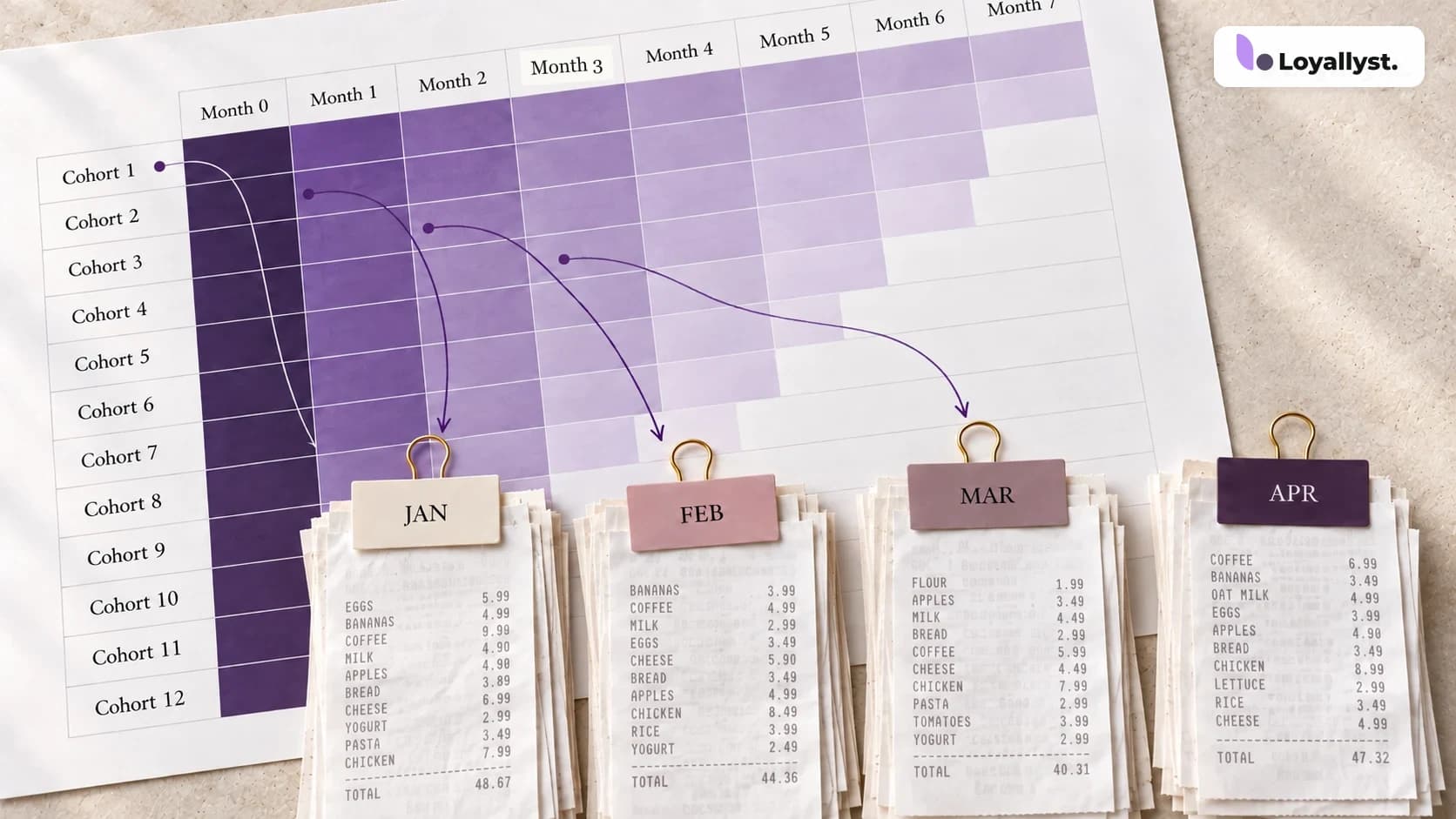
This means the average purchase frequency is 1.6 orders per customer per month. The formula itself is simple. But before calculating it, there is an important point: you need to choose the right period. For example, it makes sense to use a month for a coffee shop because visitors may come several times a week. A quarter is often more representative for a clothing store. The cycle is even longer for furniture or expensive electronics.
How can purchase frequency help forecast revenue?
This metric is convenient for making a simple forecast. Suppose you have 2,000 active customers. The average purchase frequency is 1.4 orders per month, and the average order value is $35. An approximate forecast can be calculated as follows:
2000 × 1.4 × $35 = $98,000
That gives approximately $98,000 in potential monthly revenue from the current active customer base. Now imagine that a loyalty program helped increase the frequency from 1.4 to 1.6 orders. The calculation would then be:2000 × 1.6 × $35 = $112,000
 The difference is $14,000 with the same number of customers and the same average order value.
Of course, seasonality, product range, promotions, and dozens of other factors affect sales in practice. But understanding the regularity of customer purchases still provides a useful basis for planning.
The difference is $14,000 with the same number of customers and the same average order value.
Of course, seasonality, product range, promotions, and dozens of other factors affect sales in practice. But understanding the regularity of customer purchases still provides a useful basis for planning.
How can purchase frequency help evaluate an individual product?
Frequency is useful not only for analyzing the entire customer base. You can also use it to assess individual categories and products.
Imagine a clothing store that sells two basic T-shirts at roughly the same price. The first sells very well, with many initial orders and high traffic from the product page. The second sells less at first. If you look only at the number of sales, the first seems like the obvious winner. But after a few months, a different picture appears. Buyers of the first T-shirt rarely return for another one in the same style or a different color. Repeat orders are noticeably more common among customers who bought the second T-shirt. For example:
- model A — 1,200 buyers and an average subsequent purchase frequency of 1.15;
- model B — 700 buyers but an average purchase frequency of 1.48.
How can a loyalty program increase purchase frequency?
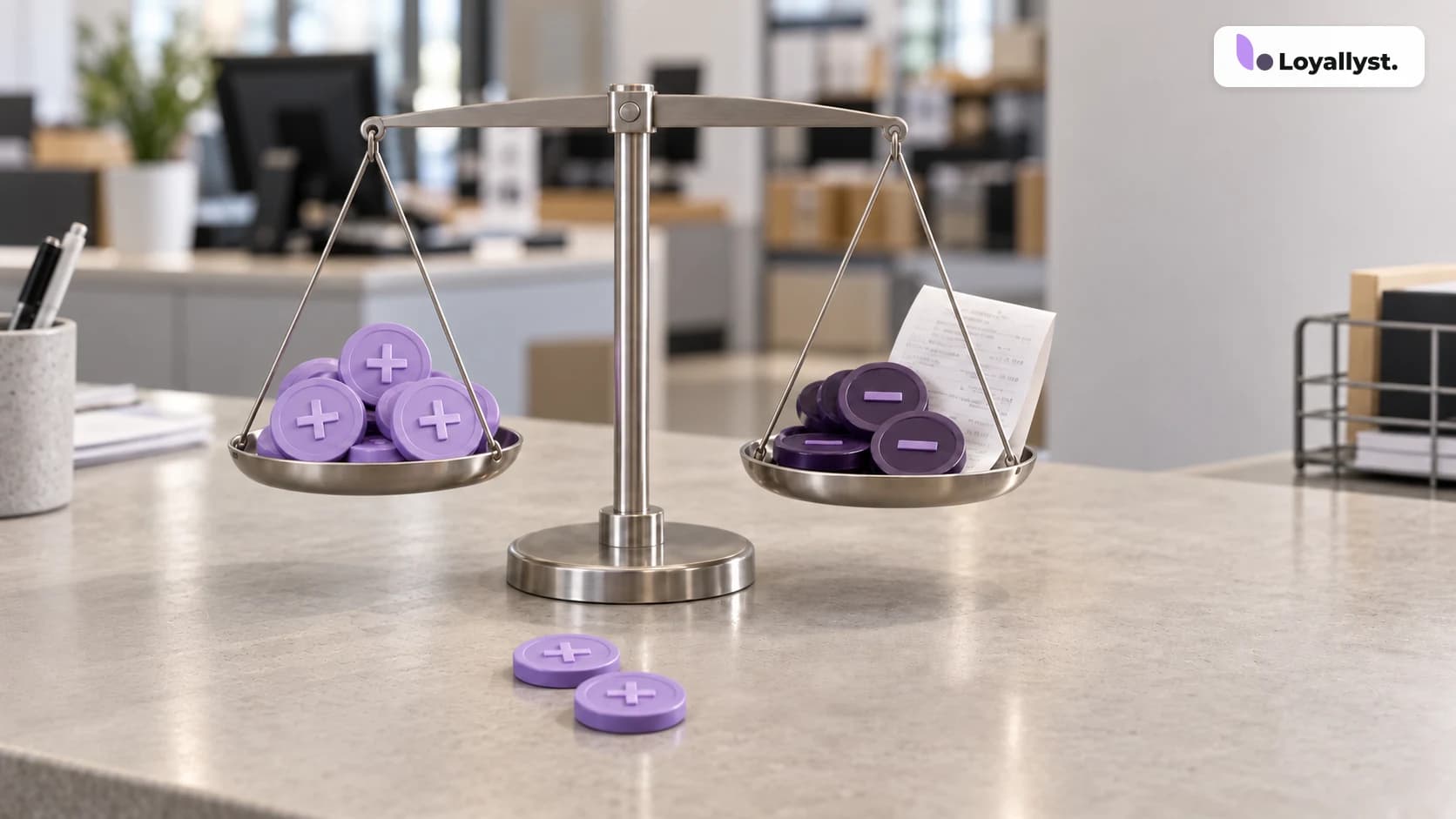
It is easy to make the mistake of immediately offering everyone a discount. Sometimes it does produce a quick increase in orders, but it does not always build a habit of returning.
It is better to start with a few more precise steps that are easiest to implement with a properly configured loyalty program.
See when customers usually buy again. If most return after 30–40 days, you can use this interval for automated reminders.
Leave a benefit for the next purchase. Rewards or cashback work because some of the value remains after the first order.
Segment customers by activity. Someone who bought a week ago and a customer who has not placed an order for three months should not receive the same messages.
Test a reward for the next purchase instead of only offering a discount now. For example, an additional reward after the second order may work better than a standard discount on the first.
Use personalized recommendations. If a buyer regularly chooses a particular category, an offer for that category will be more relevant than a mass promotion across the entire range.
Monitor the result after every change. After launching a new mechanic, compare whether the average purchase frequency changed after a month or a quarter. If it did not, the problem may not be motivation at all, but service, product range, or product quality.
With Loyallyst, purchase history, rewards, customer activity, and segments are collected in one system. This helps you quickly see how purchase frequency changes, which customers return more often, and which workflows genuinely influence behavior. Ultimately, this metric answers a very practical question: how many times does a customer buy from you during a particular period? From there comes the most useful part: you can compare segments, identify weak points, and understand how to increase purchase frequency without constantly increasing the budget for acquiring new customers.
Frequently asked questions
It is the average number of orders one customer places during a selected period. The metric shows how often buyers return to a business.
Divide the number of orders during the selected period by the number of unique customers during the same period.
The period depends on the buying cycle: a month may suit a coffee shop, a quarter a clothing store, while furniture or expensive electronics require a longer interval.
Multiply the number of active customers by average purchase frequency and average order value to estimate potential revenue from the current customer base.
A loyalty program can leave a benefit for the next purchase, send timely reminders, segment customers, and measure which mechanics genuinely encourage them to return more often.