What is a loyalty program?
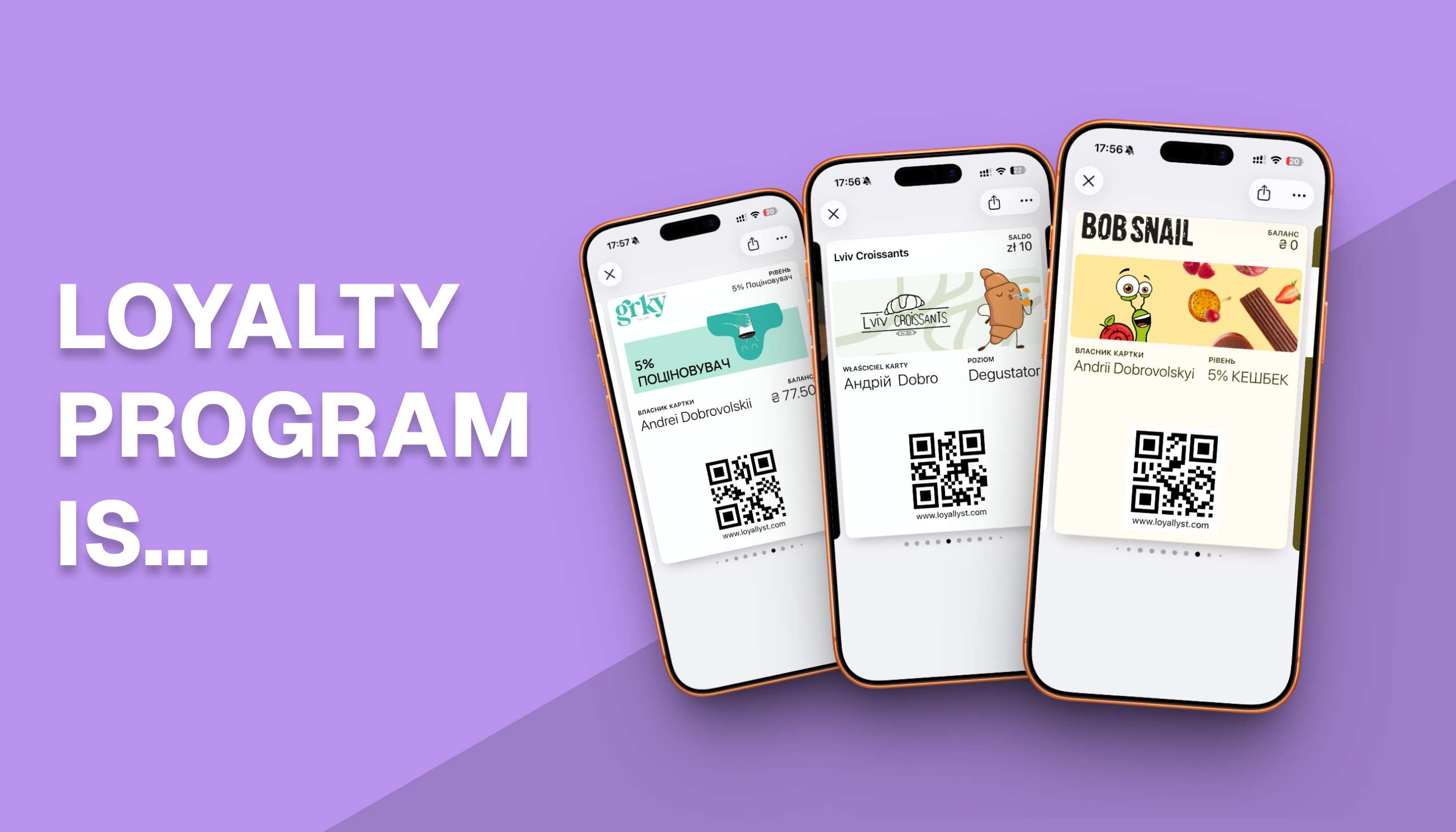
A loyalty program is a customer reward system that motivates people to buy more often and return to your business. It is based on bonuses, discounts, tiers, gifts, or privileges that customers receive for their purchases.
Why does a business need a loyalty program?
High market competition, rising advertising costs, and the difficulty of retaining customers are challenges for all business industries today. That is why building long-term relationships with customers and increasing their loyalty is so important.
A loyalty program helps to:
1. Increase the number of repeat purchases
Most businesses make a profit not from the first visit, but from the second, third, and all following ones. A loyalty program increases the chance that a customer will come back because:
- they have bonuses they do not want to lose;
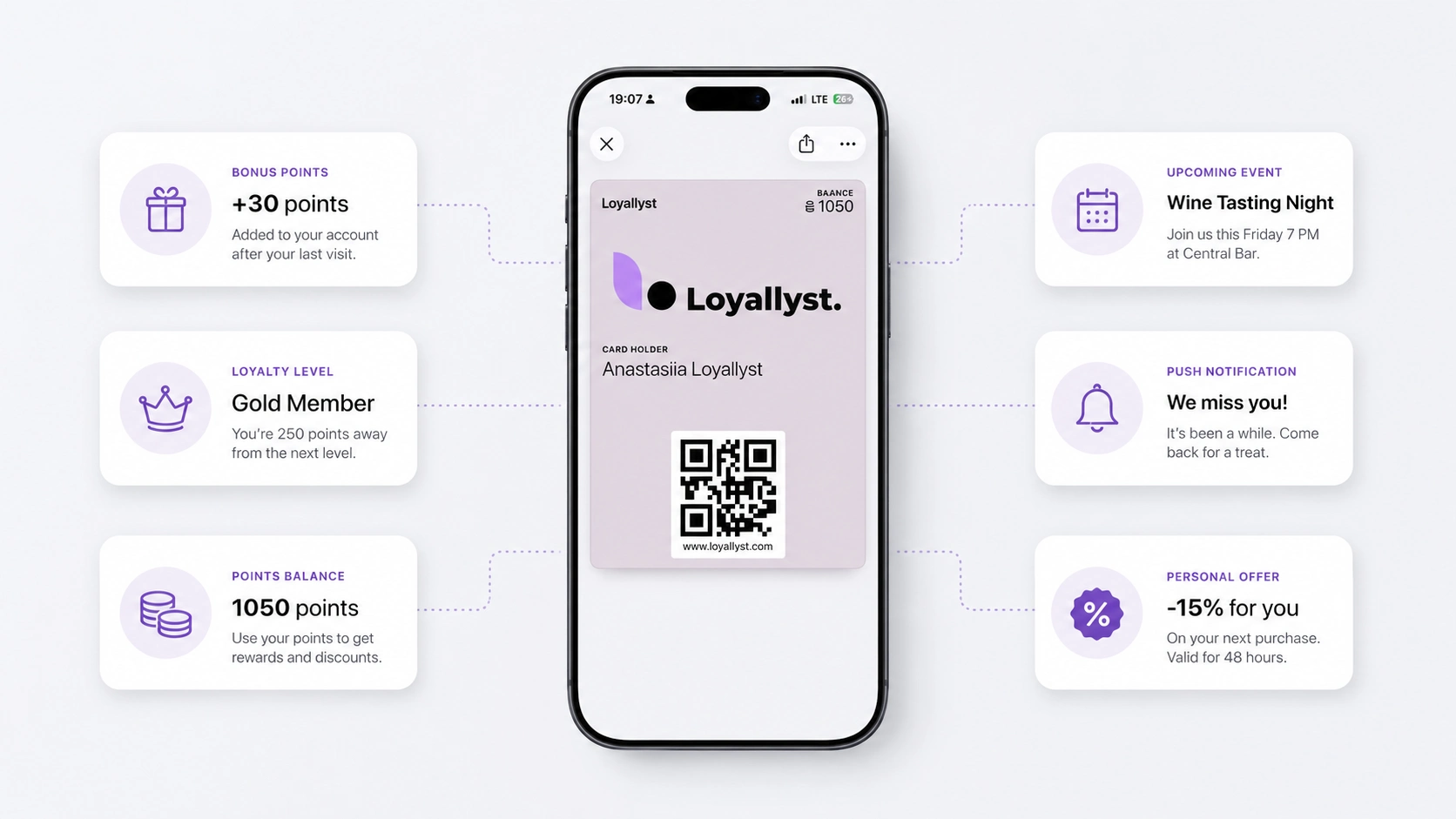
- they see their progress: Silver / Gold / Platinum tiers;
- they receive personalized offers;
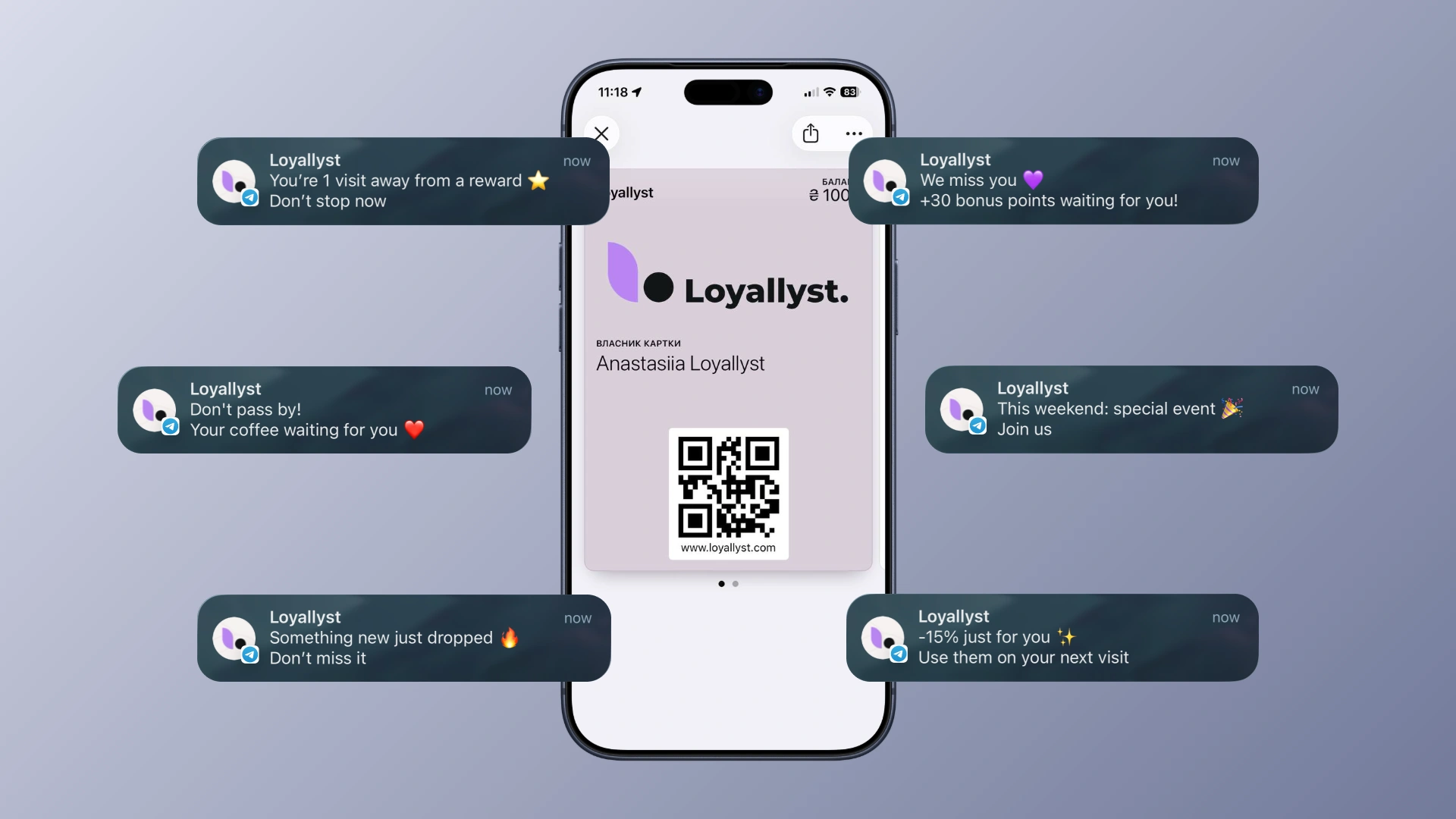
- they get push notifications with reminders.
2. Retain existing customers
Many businesses are used to measuring success by the number of new customers: more traffic, more followers, more reach. But the main revenue comes from existing customers — and they require significantly less investment. According to research, acquiring a new customer costs a business 5–7 times more than retaining an existing one. A loyalty program reduces the cost of retention almost to zero. When you have a digital loyalty card and push notifications, you can:
- bring a customer back with one message;
- remind them about their bonuses;
- offer a gift;
- re-engage someone who has not visited for a long time.
3. Increase average order value and visit frequency
Loyalty programs directly influence not only the number of repeat visits, but also customer behavior inside the business. When a person understands that part of the amount will be returned as bonuses, or that only one visit remains before the next tier, they start taking actions that are more profitable for the business — completely voluntarily, without pressure or forced upsell scripts.
- The customer adds one more item to the order more often.
- The buyer chooses a more expensive item.
- Visit frequency increases thanks to gamification mechanics.
What does loyalty give a business in numbers?
HoReCa and Retail analytics across many markets show that the average order value of loyalty program members is 18–25% higher. Because they:
- buy more often;
- choose more expensive items;
- add more items.

4. Collect customer behavior data
Loyalty cards are an opportunity to turn an anonymous flow of people into a manageable customer base. When a business does not know its customer, it works almost blindly. A loyalty program makes customers “visible” and allows decisions to be made based on data rather than intuition. A loyalty system helps you see:
- who buys more often;
- which products they choose;
- which days and hours they visit;
- how much they spend;
- how they respond to promotions.
What does this collected data give a business? It allows you to:
- launch personalized offers;
- work with cohorts;
- detect customer churn;
- adjust pricing and promotions;
- understand the real LTV, meaning lifetime value.
- it is impossible to identify regular customers;
- it is impossible to understand who left and why;
- it is impossible to build forecasts;
- it is impossible to launch targeted promotions;
- it is impossible to properly work on retention.
5. Reduce dependence on advertising
For many businesses, online advertising has become quite expensive. Acquiring new users costs more and more, while returns are becoming less stable. A strong loyalty program, in turn, becomes a strategic advantage, allowing a business to depend less on external advertising channels. A business:
- depends less on Instagram / Google Ads;
- can bring customers back for free through push notifications;
- gets organic growth through recommendations;
- creates a sense of “attachment” — the customer does not want to switch to a competitor.
Bringing customers back without an advertising budget
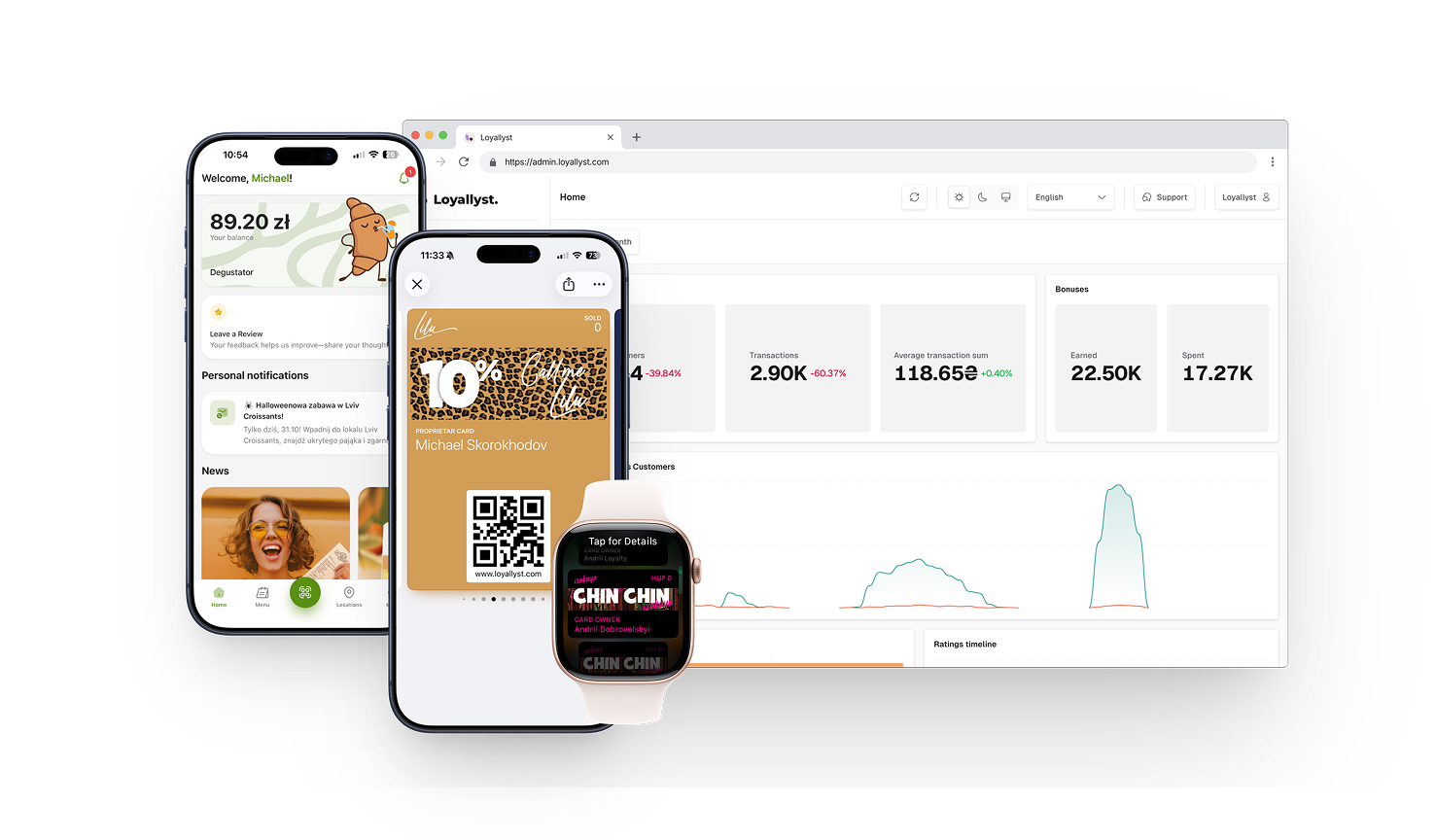
When a business has a digital loyalty program, it gains the ability to bring customers back almost for free. Especially if push notifications are used through Apple Wallet or Google Wallet.
One properly configured automated message can bring back a guest who has not visited for several weeks, without spending on Instagram Ads, Google Ads, or targeting. For example: if a customer has not visited in a long time, the system automatically sends a reminder or a personalized bonus — and the person comes back because the offer feels beneficial, not because of advertising.Loyalty as a business asset
Advertising is rented attention. You pay for every impression, every click, every visit. Loyalty is your own contact base that stays with you for the long term. These customers are available at any time: you can send a message, offer a promotion, recover churn, and increase activity. It does not depend on Instagram algorithms, does not require a budget, does not depend on seasonality, and does not disappear once advertising is turned off.
6. Building trust and an emotional connection
An emotional connection with a customer often becomes the deciding factor in whether they return to you again or not. A loyalty program turns a purchase into a personal experience in which a person feels like part of the brand and the community. When a customer receives personalized bonuses and offers, they develop a feeling of attention and care. For a person, this is a signal: “I am known and valued here.”
A sense of personal importance
VIP relationship mechanics — tiers, statuses, exclusive terms — strengthen the feeling of belonging. The customer feels that they receive more than others, and therefore that their contribution is noticed. This creates an emotional attachment that cannot be achieved through ordinary advertising or discounts.
A positive user experience When bonuses are credited automatically, and the card is stored on the phone and does not require an app, the customer gets convenience and comfort. A simple and frictionless interaction experience makes visits more pleasant. Convenience itself builds trust: the person sees that the business cares about their time and comfort.
Increasing the likelihood of recommendations
People are more likely to recommend to friends and acquaintances the places where they are treated attentively and respectfully.
Strengthening brand value The customer begins to perceive the venue or store not as a place for one-time purchases, but as part of their life: a favorite coffee shop, a favorite studio, a favorite store.
The brand becomes a habit — and that is the strongest thing a business can achieve.
Why is this critical for HoReCa, beauty, fitness, and retail?
In these segments, people choose not only a product, but also an experience. And if this experience is reinforced by attention, bonuses, privileges, and personalized offers, the customer stays for a long time. This is exactly where emotional connection plays a decisive role, forming the basis of regular and predictable revenue. Loyalty as a strategic tool for business growth Customer loyalty is what helps a business grow thanks to several key factors:
- it increases the number of repeat visits;
- it raises average order value and purchase frequency;
- it helps retain existing customers;
- it provides deep insights into audience behavior;
- it reduces dependence on advertising and external platforms;
- it builds trusting, long-term relationships with customers.
Types of loyalty programs
There is no universal loyalty program that works equally well for a coffee shop, a clothing store, a car wash, and a beauty salon. The mechanics should depend on purchase frequency, average order value, customer habits, and how quickly a person decides to make a repeat visit. For example, a simple накопувальна model works great for a coffee shop: buy several drinks — get a bonus or a gift. For a beauty salon, personalized offers, reminders, and bonuses for regular treatments are a better fit. In a restaurant, cashback, a status system, or a birthday gift may work well. And for a clothing store — tiers, seasonal offers, and bonuses for repeat purchases. Below are the main types of loyalty programs that businesses use most often.
Bonus loyalty program
A bonus program is one of the clearest and most flexible formats. The customer buys a product or service, and bonuses are credited to their card. Later, they can use them as partial payment, receive a gift, or exchange accumulated points for privileges. The main advantage of a bonus system is that it does not devalue the product as much as постоянные discounts. The customer sees the benefit, but the business does not have to reduce the price immediately. Bonuses work more gently: a person is not just buying cheaper, they feel that they are accumulating something of their own. And this helps retention well. A bonus program is especially well suited for cafes, restaurants, stores, beauty salons, gas stations, car washes, fitness studios, and any businesses where the customer can return regularly. What it may look like:
- for each purchase, the customer receives 5–10% in bonuses;
- bonuses can be used to pay for part of the next purchase;
- after reaching a certain amount, a new tier opens up;
- on their birthday, the customer receives a gift or an extra bonus;
- for referring a friend, the customer receives additional points.
Discount loyalty program
A discount program is built around a discount. The customer receives a permanent or cumulative discount that is applied during purchase. This is a familiar format: 5%, 10%, 15% for regular customers, or different discount tiers depending on the total purchase amount. The advantage of a discount system is its simplicity. The customer does not need to understand complex rules, count points, or wait until something is accumulated. They immediately understand: “I have a discount, so it is more profitable to buy here.” But this format also has a weak side. If a business gives discounts too often, customers start to perceive them as the norm. The full price begins to feel overpriced, and the brand gradually loses value in the customer’s eyes. This is especially risky for restaurants, salons, fashion retail, and services where not only price matters, but also experience, trust, and quality. A discount program works well where customers value a quick and obvious benefit:
- clothing stores;
- grocery stores;
- pharmacy chains;
- beauty salons;
- services with regular purchases;
- local retail.
Cashback program
A cashback program is similar to a bonus program, but customers perceive it a little differently. The word “cashback” sounds simpler and clearer: a person buys something — and part of the amount comes back to them. Not always as real money, more often as internal bonuses that can be used within the business. This format works well because the customer feels a direct benefit. They see: spent 1000 UAH — received 50 or 100 UAH back for the next purchase. This creates a very clear reason to return. Cashback is especially useful where purchases are repeated, but the customer can easily switch to a competitor:
- restaurants;
- cafes and coffee shops;
- gas stations;
- supermarkets;
- cosmetics stores;
- online stores;
- delivery services.
Tiered loyalty program
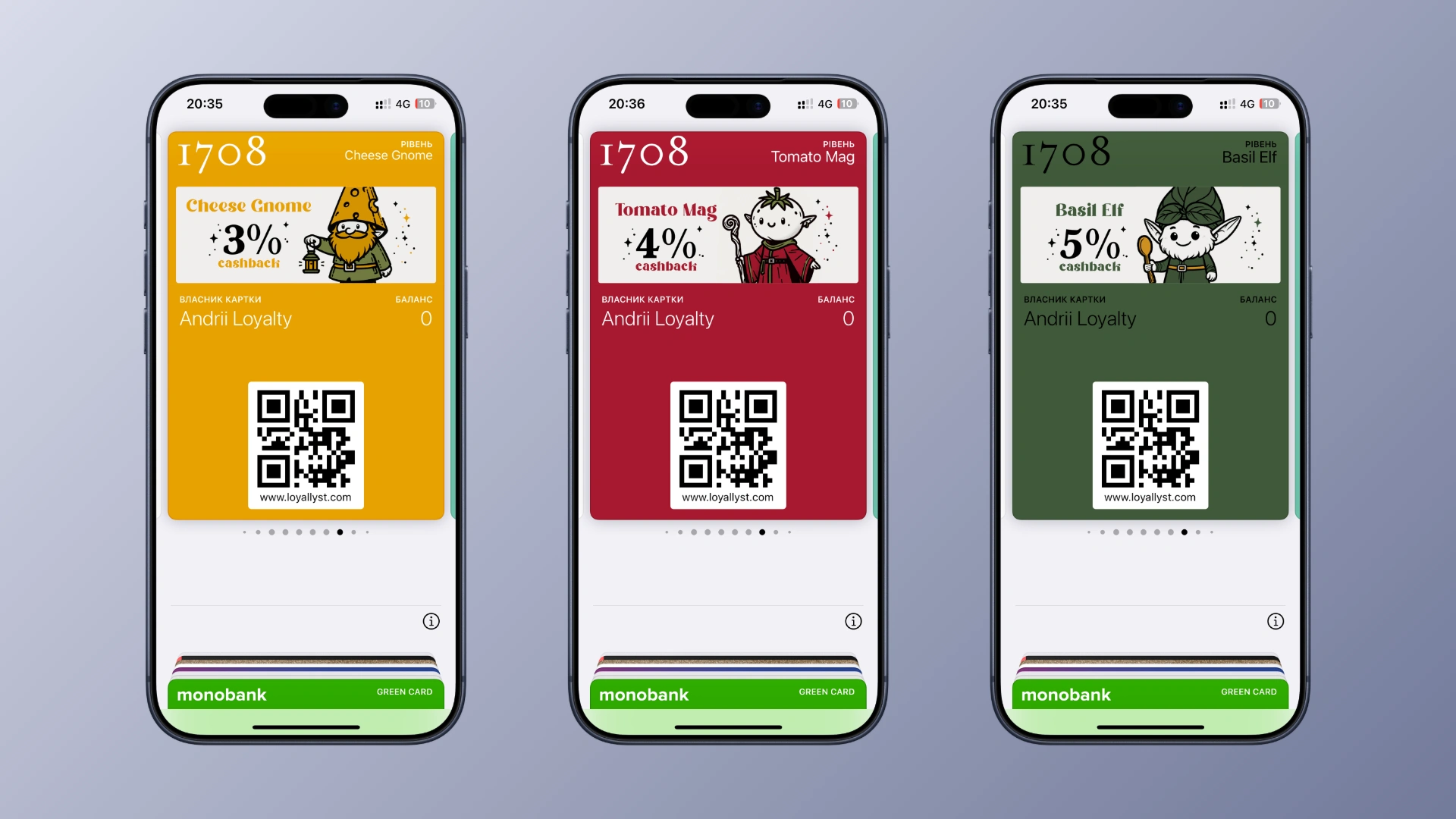
A tiered program is built around statuses. The more actively a customer buys, the higher their level becomes and the more privileges they receive. For example: Silver, Gold, Platinum. This mechanic works not only through benefits, but also through a sense of progress. People enjoy seeing that they are moving “higher” within the system. Especially if the new level gives not just a discount, but a feeling of special treatment. What can be linked to tiers:
- increased cashback;
- personalized offers;
- birthday gifts;
- early access to promotions;
- private events;
- free delivery;
- special conditions for regular customers.
Subscription-based loyalty program
The subscription model works according to a different principle: the customer pays a fixed amount for access to benefits. This can be a monthly subscription, club card, membership pass, or membership program. In return, the person receives privileges:
- free delivery;
- private discounts;
- exclusive offers;
- gifts;
- priority service;
- access to special products or events.
Referral program
A referral program motivates customers to invite their friends. A person recommends the business to someone they know and receives a bonus, discount, gift, or another reward for it. The new customer may also receive a welcome bonus — and then the mechanic becomes beneficial for both sides. Referral programs work well where trust plays a major role:
- beauty salons;
- fitness studios;
- restaurants;
- local services;
- educational projects;
- e-commerce;
- subscription-based services.
Examples of loyalty programs in Ukraine
Theory is easier to understand through real cases. Especially when you can see not only the mechanic, but also the result: what existed before the launch, what task the business needed to solve, and how the loyalty program changed the team’s work or customer behavior. Below are several examples of Ukrainian brands that implemented a loyalty program with Loyallyst in different niches: fashion retail and HoReCa.
VMMA × Loyallyst: bonus automation for a fashion brand
VMMA is a Kyiv-based women’s clothing brand that operates both online and offline. Before implementing Loyallyst, the team already had a loyalty program, but bonus tracking was manual: first through physical cards, then through online cards, but still with spreadsheets.
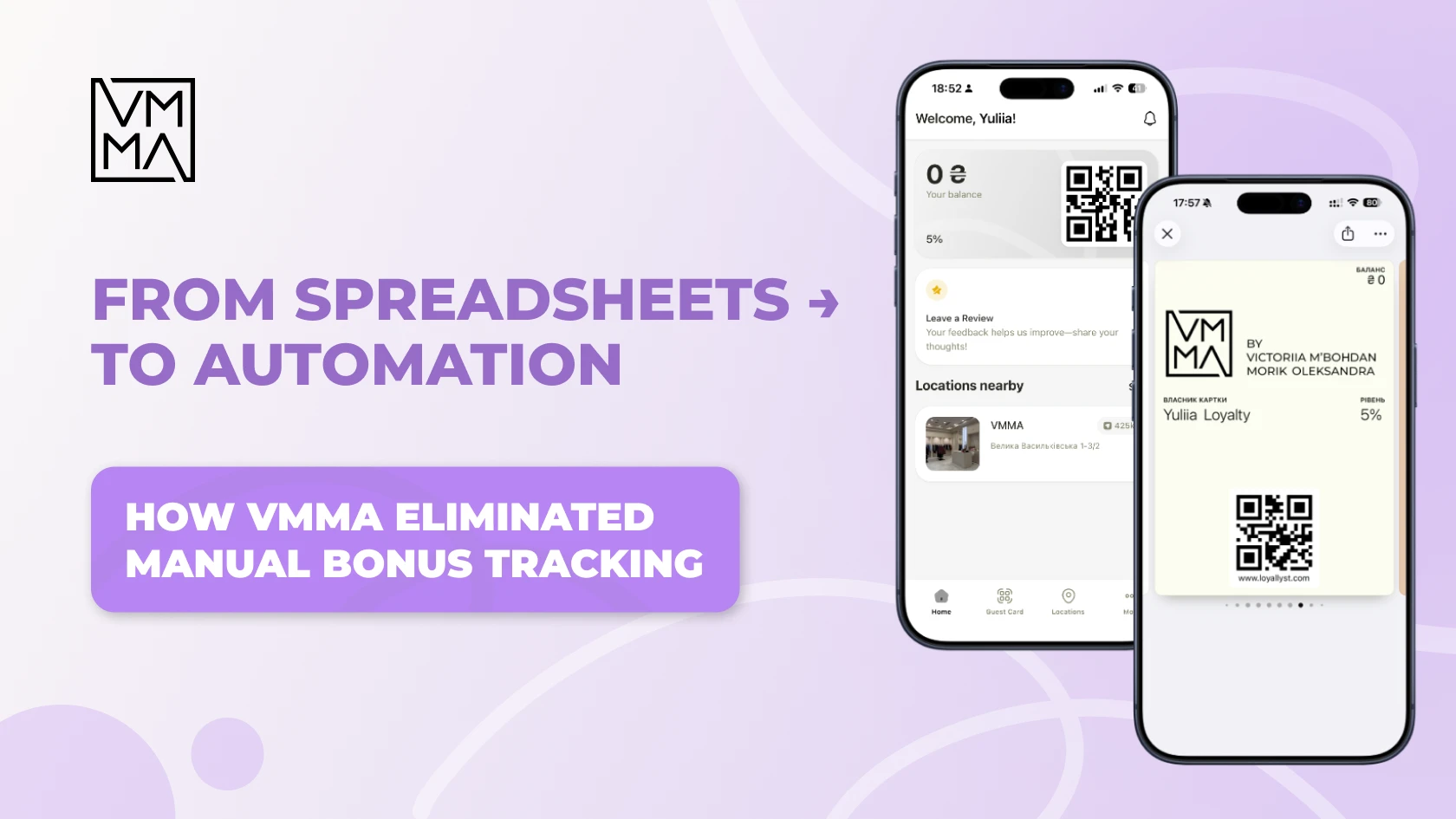 In practice, this created extra workload for consultants. To check a customer’s bonus balance, they had to find her in a spreadsheet, verify the data, and manually calculate accruals and redemptions. The larger the customer base became, the less convenient this system was.
VMMA’s task was simple and very clear: automate bonus accrual and redemption, remove manual spreadsheets, and connect the loyalty program with KeyCRM, which the brand was already using in its work.
What was configured:
In practice, this created extra workload for consultants. To check a customer’s bonus balance, they had to find her in a spreadsheet, verify the data, and manually calculate accruals and redemptions. The larger the customer base became, the less convenient this system was.
VMMA’s task was simple and very clear: automate bonus accrual and redemption, remove manual spreadsheets, and connect the loyalty program with KeyCRM, which the brand was already using in its work.
What was configured:
- 5% in bonuses from every purchase for all program members;
- 10% in bonuses for customers whose total purchase amount exceeded 25,000 UAH;
- 300 UAH in bonuses 7 days before the customer’s birthday;
- bonus activation 14 days after purchase to avoid errors in case of returns;
- a loyalty card in Apple Wallet and Google Wallet;
- synchronization with KeyCRM so consultants could immediately see customer data.
You can view the detailed VMMA × Loyallyst case here.
CICI COCO × Loyallyst: an accumulative program for a fashion brand
CICI COCO is a Ukrainian women’s clothing brand with offline spaces in Lviv, Kyiv, and Odesa. For a fashion brand, loyalty is especially important: the customer chooses not only an item, but also the atmosphere, service, and feeling of the brand. That is why a loyalty program should be simple, beautiful, and easy to understand — without unnecessary steps.
The CICI COCO team wanted to launch a system that motivates customers to return more often, increases purchase engagement, and creates a sense of value for regular guests of the brand.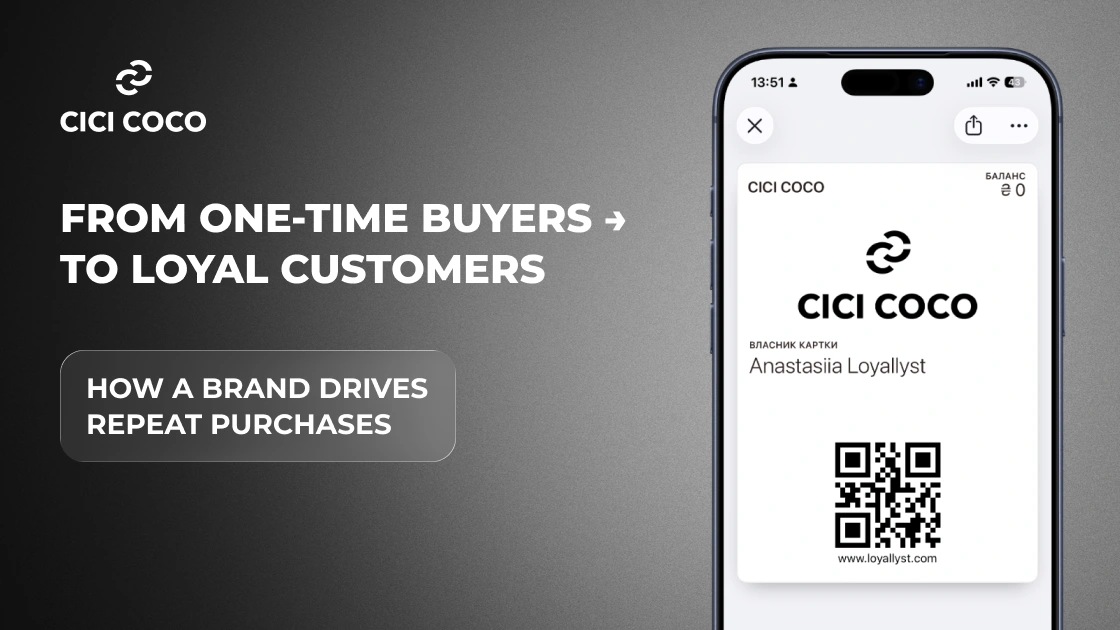 Together with Loyallyst, an accumulative loyalty program with growing discount tiers was implemented:
- 3% discount — from 3,000 UAH in total order amount;
- 5% discount — from 10,000 UAH;
- 10% discount — from 25,000 UAH;
- 15% discount — from 50,000 UAH.
- a clear tier system;
- automatic accumulation of the purchase amount;
- simple mechanics for customers and the team;
- a digital experience without plastic cards;
- a program that fits organically into the brand’s style.
You can view the detailed CICI COCO × Loyallyst case here.
GRKY × Loyallyst: a loyalty program for a coffee shop chain
GRKY is a large coffee shop chain in Kyiv with a regular audience and a recognizable brand. When a chain grows, its loyalty program needs to grow with it. Old mechanics that worked on a small scale eventually stop being flexible enough: it becomes harder to work with segments, bring guests back, and personalize communication.
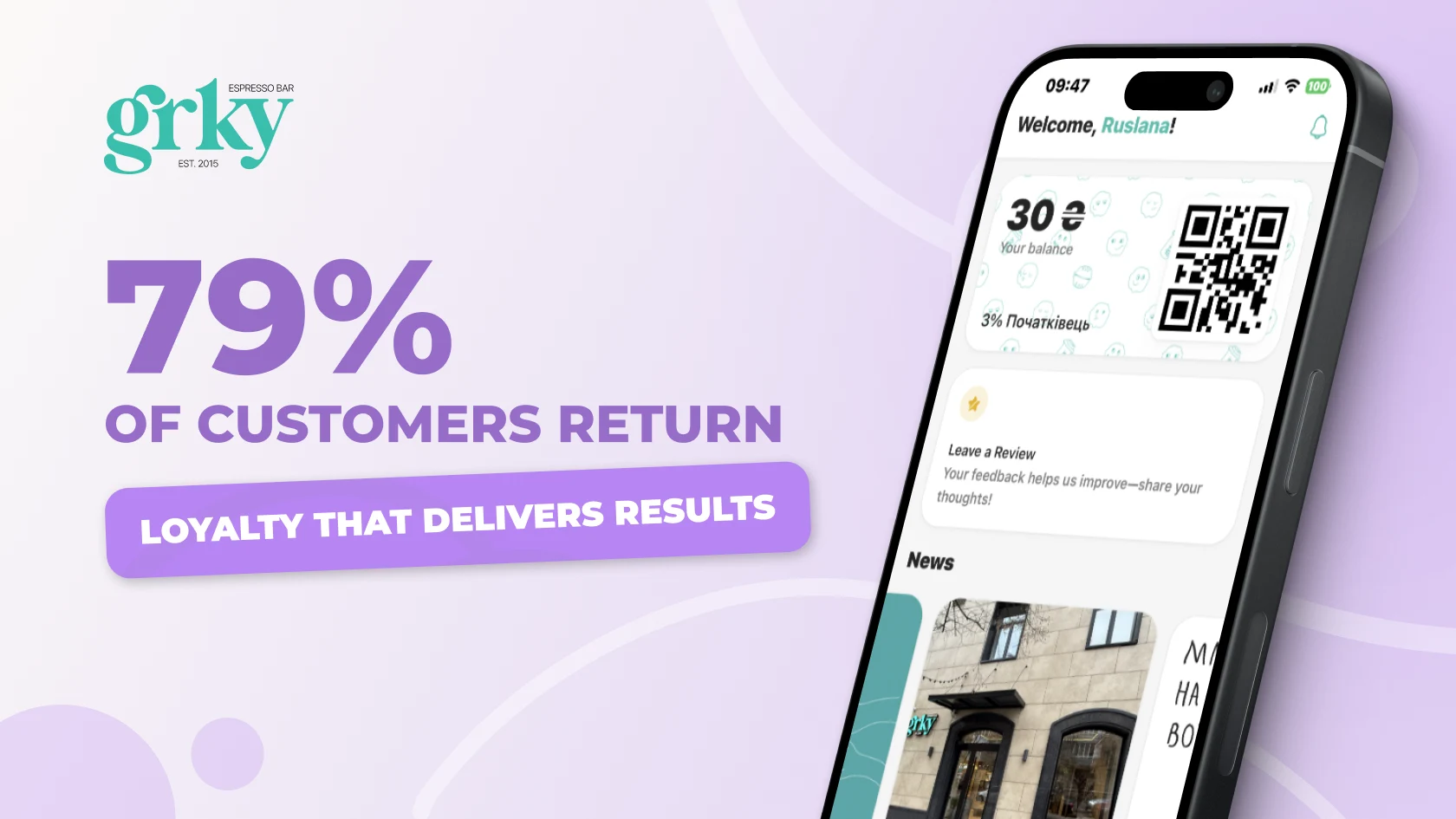 GRKY needed to update its loyalty program so that it would be convenient for customers and useful for the business. The goal was to preserve the existing customer base, make the card available in Apple Wallet and Google Wallet, add a mobile app, introduce tiers, cashback, referral mechanics, and automated communication scenarios.
Cashback tiers were configured in the program:
GRKY needed to update its loyalty program so that it would be convenient for customers and useful for the business. The goal was to preserve the existing customer base, make the card available in Apple Wallet and Google Wallet, add a mobile app, introduce tiers, cashback, referral mechanics, and automated communication scenarios.
Cashback tiers were configured in the program:
- Beginner — 3%;
- Taster — 4%;
- Connoisseur — 5%;
- Expert — 7%;
- Coffee Geek — 9%;
- God of Coffee — 11%.
- 93% of bonuses are used by customers;
- 79% of guests return and make repeat purchases;
- 44% of customers return after a push reminder about bonuses after 10 days;
- more than 5,000,000 push notifications sent;
- savings on SMS campaigns exceeded 4,000,000 UAH;
- customers see their tier progress in real time;
- automatic collection of reviews after purchase helped increase the amount of feedback.
You can view the detailed GRKY × Loyallyst case here.
What do these cases show? At VMMA, the loyalty program solved an operational problem: it removed manual spreadsheets, sped up consultants’ work, and made bonuses clear for customers. At CICI COCO, the program became part of the fashion experience: it helped increase engagement, repeat purchase frequency, and average order value. At GRKY, the loyalty program turned into a complete retention system: with tiers, cashback, push notifications, reviews, and measurable results for repeat purchases. In all three cases, the mechanics were different. And that is normal. A good loyalty program does not have to be the same for every business. It should solve a specific task: automate the team’s work, bring customers back, increase average order value, collect data, or make the customer experience more convenient. That is why before launching, it is important not just to choose “bonuses or discounts,” but to understand which model fits your niche, customers, and current business processes.
How to choose a loyalty program for your business?
Choosing a loyalty program does not start with the card design or even the size of the bonus. First, you need to understand why a customer should return specifically to you. For a discount? For convenience? Out of habit? Because they feel remembered? Different niches have different behavior scenarios. In some places, customers come every day, in others once a month, and in some — only before holidays or when they need something. That is why a mechanic that works perfectly for a coffee shop may be almost useless for a clothing store or a car wash.
For a cafe
In a cafe, visit frequency is usually the most important factor. A person may come in for breakfast, lunch, coffee to go, or a quick snack. That is why a loyalty program for a cafe should be simple and fast: the customer will not spend much time figuring out the rules, especially if they are buying coffee on the way to work. What works for cafes:
- bonuses for every purchase;
- a gift after a certain number of visits;
- cashback for the next purchase;
- morning or lunch offers;
- push reminders at the right time;
- a birthday gift.
For a restaurant
In a restaurant, the average order value is higher, and the decision to visit is often connected not only with price. People choose the atmosphere, cuisine, service, and occasion. That is why a loyalty program for a restaurant should work more carefully: it should not turn the brand into a “discount” brand, but strengthen the feeling of special treatment. What can work:
- cashback from every bill;
- VIP tiers for regular guests;
- personalized offers;
- a birthday gift;
- bonuses for booking or a repeat visit;
- private offers for regular customers.
For a coffee shop
A coffee shop is one of the most convenient niches for a loyalty program because purchases are often repeated. The same person can come several times a week, sometimes every day. And if the loyalty program is built into this ritual, it starts working very quickly. What can be used:
- every Nth drink as a gift;
- bonuses for every purchase;
- morning offers;
- seasonal drinks for program members;
- personalized push notifications;
- extra bonuses for referring a friend.
For a clothing store
In fashion retail, purchases happen less often, but the order value can be higher. The customer does not return every day, so the task of a loyalty program for a clothing store is not only to credit bonuses, but also to remind customers about the brand between purchases. What works:
- accumulative discounts;
- bonuses for purchases;
- early access to sales;
- personalized offers by category;
- a birthday gift;
- VIP tiers for regular customers;
- notifications about new collections.
For a beauty salon
In a beauty salon, loyalty is built on trust. The customer returns not only because of the price, but because they like the specialist, the result, the atmosphere, and the attitude. That is why a loyalty program for a salon should support regular visits and gently remind customers about their next procedure. What works:
- bonuses for visits;
- reminders about booking again;
- a birthday gift;
- a bonus for referring a friend;
- personalized offers for procedures;
- tiers for regular customers.
For a car wash
A car wash is a niche where a loyalty program can work very practically. The customer needs the service regularly, but their choice often depends on convenience, price, and habit. If they have bonuses or a digital card, they are more likely to return to the place where they already have accumulated value. What works:
- every Nth wash with a discount or as a gift;
- bonuses for visits;
- service packages;
- reminders after a certain period;
- promotions during bad weather or before weekends;
- referral bonuses.
Common mistakes when launching a loyalty program
Even a good idea may not work if the loyalty program is launched without a well-thought-out mechanic. Sometimes a business creates a card, credits bonuses, adds a beautiful design — and customers still do not come back. Not because loyalty “does not work.” The system itself is simply built in a way that does not make people want to use it.
Here are the mistakes that happen most often.
1. Rules that are too complicated If a customer needs to read a long instruction, calculate percentages, remember exceptions, and clarify conditions with an administrator, the program is already losing. Loyalty should be understandable almost immediately. A good rule: a person should understand within 10–15 seconds what they get and why they need it.

2. Bonuses exist, but they are hard to spend
Crediting bonuses is not enough. The customer should be able to use them easily. If bonuses can cover only a small part of a purchase, only on certain days, or only for limited products, the person quickly becomes frustrated. They have supposedly accumulated something, but they do not feel the benefit.3. Motivation is too weak
If the benefit is not noticeable, the program does not change behavior. For example, the customer receives 1% in bonuses, but buys rarely and does not see a reason to return for such a small amount. The mechanic should be beneficial not only for the business, but also tangible for the customer. Otherwise, it remains a formality.4. Same offers for everyone
A new customer, a regular guest, and a person who has not visited for three months should not receive the same message. They have different motivations and different relationships with the brand. Personalization is one of the main reasons to launch a loyalty program. Without it, the business simply sends the same promotions to everyone and loses part of its opportunities.5. No communication after registration
The customer added the card — and then silence. This way, the program is quickly forgotten. People will not check their bonuses every day on their own, search for the terms, or remember the venue. Reminders are needed: about bonuses, new offers, gifts, expiration dates, and personalized promotions. But carefully, without spam.6. The program is not connected to POS or sales
If data is not transferred automatically, the business has to do everything manually. This is inconvenient, errors appear, employees forget to credit bonuses, and the customer loses trust. A good loyalty program should be built into real processes: sales, receipts, customer database, analytics, and messages.7. No analytics
Without analytics, it is impossible to understand whether the program works or not. The business sees that bonuses are being credited, but does not understand the main thing: who returns, how much they spend, which promotions worked, and where customers drop off. It is necessary to track at least basic metrics: the number of active customers, repeat purchases, average order value, visit frequency, bonus usage, and churn.
8. Too many discounts
Constant discounts can quickly train customers to buy only during promotions. As a result, the loyalty program does not increase brand value, but reduces the margin. It is better to combine discounts with bonuses, tiers, gifts, personalized offers, and status privileges.9. Employees do not explain the program to customers
Even the most convenient system may not take off if the staff does not understand how to present it. Customers often learn about the program specifically from a waiter, barista, administrator, or salesperson. The team should be able to easily explain:- what the customer receives;
- how to add the card;
- how bonuses are credited;
- how to use them.
- The program is launched without a strategy
- who we want to bring back;
- what action we want to stimulate;
- what benefit we give the customer;
- which metrics we will track;
- how we will remind customers about the program.
How to implement a loyalty program? A short guide
- Define the mechanic: bonuses, discounts, tiers.
- Connect POS integration or a web scanner.
- Launch Apple / Google Wallet digital cards.
- Set up automation and push notifications.
- Launch a campaign among customers.
- Analyze statistics and improve the mechanic.
To break down these stages in detail and show how they work in a real business, we prepared a full guide:
👉 How to launch a loyalty program with Loyallyst: a complete step-by-step guide
Frequently Asked Questions
A loyalty program is a system for rewarding customers for purchases, repeat visits, or other actions. Customers receive bonuses, discounts, cashback, gifts, tiers, or special conditions, while the business gets more repeat purchases and a better understanding of its audience.
A customer joins the program, receives a loyalty card — plastic, virtual, or in Apple Wallet / Google Wallet — and starts earning rewards for purchases. For example, after making a payment, they receive bonus points that can later be used for a discount, a gift, or moving to a new tier.
The most common types of loyalty programs are bonus, discount, cashback, tiered, referral, subscription-based, and club programs. Sometimes a business uses one format, and sometimes it combines several, such as bonuses, tiers, and a birthday gift.
It depends on the business. Discounts are easier to explain to customers, but they can reduce margins and teach people to buy only when prices are lower. Bonuses work more subtly: the customer still gets value, but is more likely to return to use it.
To create a loyalty program, you first need to choose the mechanic: bonuses, cashback, discounts, tiers, or gifts. Then you need to connect a loyalty card, set up reward accrual, plan customer communication, and launch analytics.
The cost depends on the functionality. A simple program with digital cards and basic settings will cost less than a complex system with POS integration, tiers, segmentation, automated scenarios, and analytics.
A loyalty program is suitable for almost any business where customers can return again. It works especially well in HoReCa, retail, beauty, fitness, car washes, services, e-commerce, food delivery, and local chains.
No, a separate mobile app is not always needed. Customers can use a digital card in Apple Wallet or Google Wallet, while the business can send messages and add bonuses through the loyalty system.
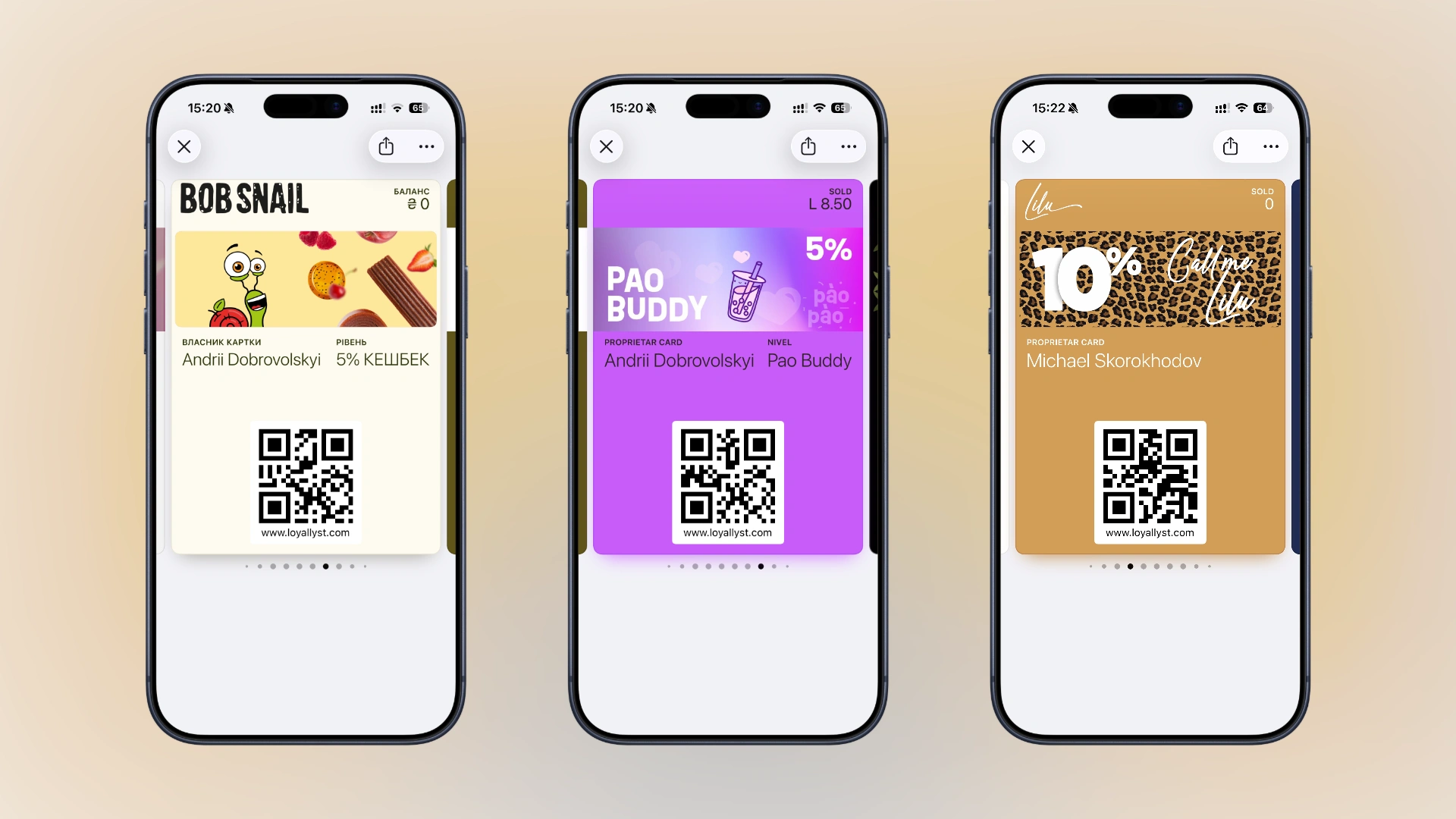
Yes. Apple Wallet can be used for digital loyalty cards. The customer adds the card to their phone and uses it during a purchase. Such a card can display bonuses, tier, QR code, personal data, and current offers.
Yes, Google Wallet works in a similar way for Android users. The customer adds the loyalty card to their wallet and uses it during a visit or purchase.
Yes, a loyalty program can work without a POS system. If there is no POS integration, you can use a web scanner, QR codes, manual bonus accrual, or other scenarios. But for a large customer flow, POS integration is usually more convenient.
A loyalty card is the tool through which a customer participates in the program. A loyalty program is the whole system: rules, bonuses, tiers, campaigns, analytics, segmentation, personal offers, and customer retention scenarios.
To understand whether a loyalty program is working, you should look not only at the number of issued cards, but also at repeat purchases, visit frequency, average order value, customer activity, bonus usage, LTV, and responses to push notifications.
Yes. A loyalty program is not only for chains. A single cafe, salon, restaurant, bar, or car wash can also use digital cards, bonuses, and push notifications.
A digital card is more convenient for most customers. It is stored on the phone, does not get lost, does not require printing, and can update automatically. A plastic card can still work, but it is easy to forget at home or lose.
It is better to send push notifications less often, but more precisely. Messages about earned bonuses, points that are about to expire, a birthday gift, a personal offer, a new promotion, or a reminder for a customer who has not visited in a while usually work well.
Yes, if the business already has a customer database, it can be used to launch the program. For example, phone numbers, names, purchase history, or segments can be transferred — depending on what data is available and in what format.
Yes, a loyalty program can be launched quickly if you do not overcomplicate the mechanics at the start. For example, you can begin with a digital card, QR registration, basic bonus accrual, and a few push notification scenarios.