Referral Program for Business: How to Launch One and Calculate Rewards
A good customer already has something businesses usually pay advertisers for: the trust of their friends and acquaintances. If they genuinely like a store, salon, or service, they may well tell a friend about it. The only question is how to turn those occasional recommendations into a consistent system.
That is what a referral program for business is for. A customer invites a new buyer through a link, QR code, or personal code and receives a reward once the required condition is met. The invited customer often gets a bonus too, making the offer more appealing to both sides.

How Does a Referral Program Work?
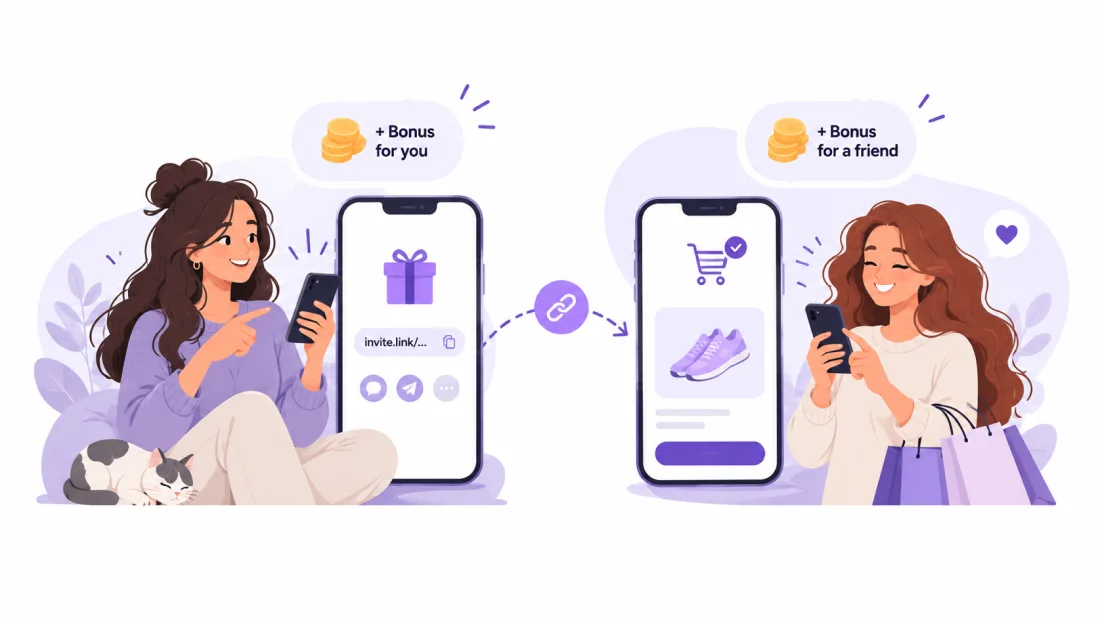
The basic mechanics are quite simple. Suppose a regular customer receives a personal link and sends it to a friend. The friend registers and places a first order. The system identifies who referred them, then awards 500 points to the referring customer and gives the new customer a 10% discount on their first purchase.
This is the familiar “refer a friend” program. However, the rules can also use a fixed reward, a percentage of the purchase, a gift, or increased cashback.
In short, how a referral program works:
- the participant receives a personal invitation method;
- they share it with a friend;
- the new customer completes the required action, such as making a first purchase;
- the system records the referral;
- the participant receives a reward for referring a friend.

Why Does a Business Need a Referral Program?
The main advantage is that the new customer arrives through the recommendation of someone they already trust rather than through ordinary advertising. This creates several opportunities for a business at once. It can reduce dependence on paid acquisition, grow its customer base, and reward regular buyers at the same time. However, counting invitations alone is not enough. It is much more important to see how many invited customers actually made a purchase, what their average order value is, and whether they return. For example, 100 customers shared their links and brought in 60 new users. Only 18 made a purchase. The program’s real value is therefore determined by those 18 buyers, not by every registration.
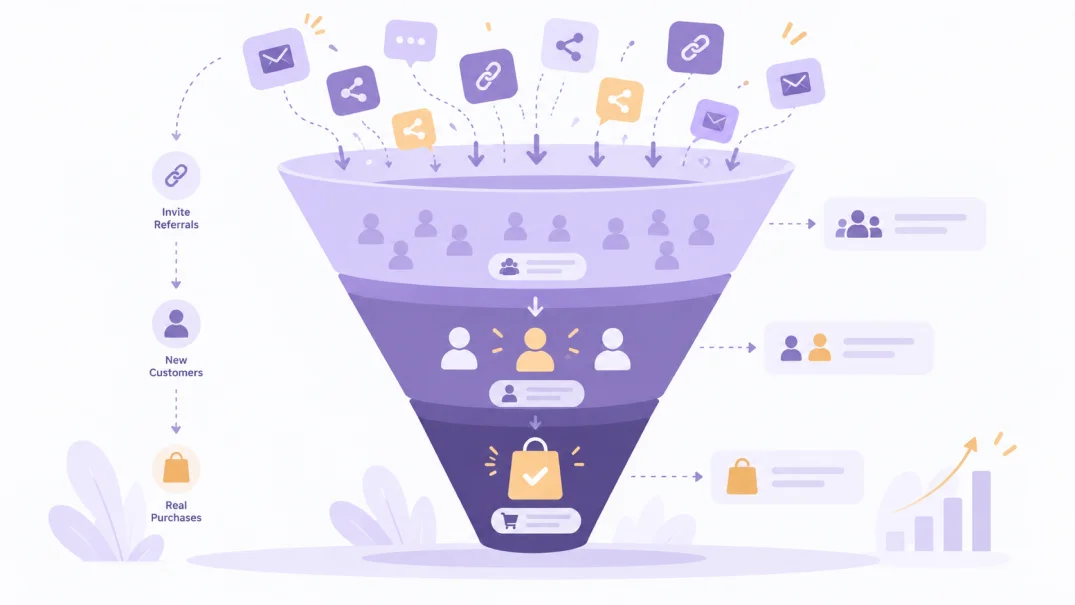
A good customer referral program should therefore be connected to sales analytics.
How Do You Calculate the Reward?
It is easy to get carried away here. A larger reward makes the invitation more attractive, but an overly generous offer can make acquisition unprofitable. Start with how much you are prepared to pay for a new customer. Suppose the average order value is $70 and the gross margin on an order is $28. You decide that you can spend no more than $12 to acquire a new customer. For example, you could give $7 in points to the referring customer and offer the new buyer another $5 as a discount. The total acquisition cost would be:
$7 + $5 = $12
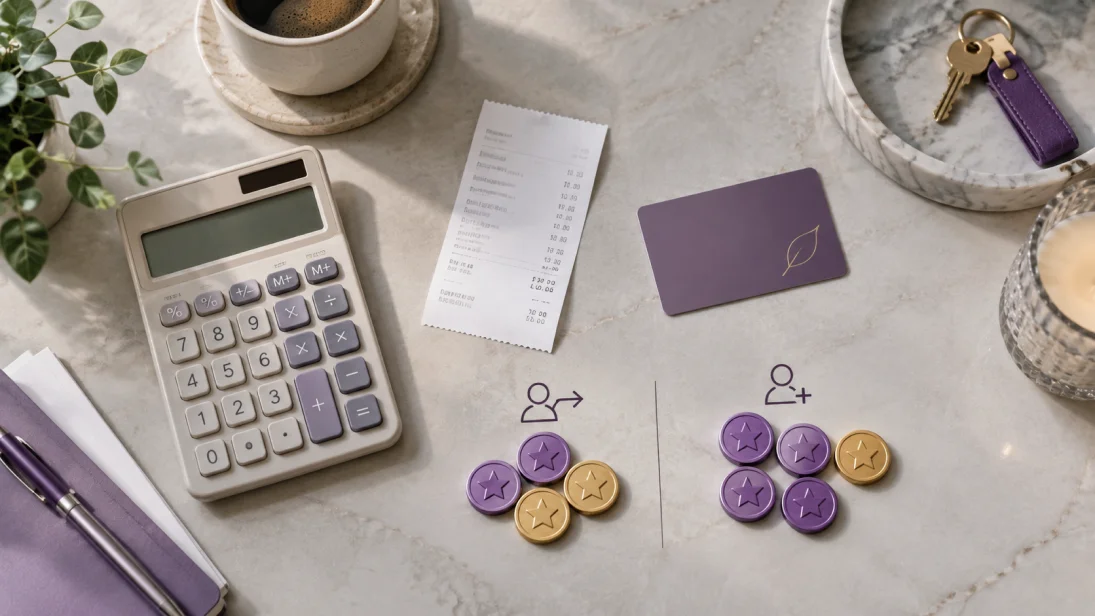
Acquisition cost = total referral reward expenses / number of new customers who made a purchase
If you spent $900 on rewards in one month and gained 100 new buyers, the referral acquisition cost was $9. You can then compare it with advertising.How Do You Create a Referral Program?
It is better to start with the rules, not the size of the reward. First, decide which action you are prepared to pay for. For most companies, it makes more sense to define success as the first paid purchase. Next, determine the reward. It should be noticeable to the customer but remain safe for the business model. Fixed points can sometimes be easier to understand than percentages: “get 300 points for a friend” feels simpler than a complex calculation system. Then set restrictions. For example, points may be awarded only after the invited customer’s first purchase above a certain amount, and customers must not be able to refer themselves. Finally, make the process short. If customers have to hunt for a referral code in their account, copy several links, and read a separate rules page, very few people will share an invitation.
Why Combine Referral Mechanics with a Loyalty Program?
A loyalty program is a system of points, cashback, tiers, and personalized offers that helps retain customers and encourage repeat purchases. Referral mechanics complement this system well. The customer already has a digital card and a points balance. The referral reward can be credited there too. Meanwhile, the business can see who brought in the new buyer, what they purchased, and how much that acquisition cost.
The result is a complete referral loyalty system: existing customers help expand the database, while their rewards create another reason to return for the next purchase. After launch, track at least four metrics: invitations, conversion from invitees to buyers, acquisition cost, and repeat orders from new customers. If referrals arrive but buy almost nothing, increasing the reward makes little sense—check the offer itself first.
With Loyallyst, referral mechanics can be linked to the overall loyalty program, points balance, and purchase history. Inviting a friend then becomes a permanent customer acquisition and retention channel rather than a standalone promotion lasting only a few weeks.

Frequently asked questions
It is a system in which an existing customer invites a new buyer through a personal link, QR code, or code and receives a reward after the required condition is met.
Issue the reward after the invited customer's first paid purchase rather than for registration alone. This ensures the business pays for a real result.
Determine an acceptable acquisition cost based on average order value, margin, and repeat purchases, then divide it between the referring customer and the new buyer.
Track invitations, conversion from invitees to buyers, acquisition cost, average order value, and repeat orders from new customers.
Credit referral rewards to the customer's existing digital-card balance and keep the invitation, first purchase, and customer history connected in one system.