Earning and Redeeming Bonus Points: Rules for a Profitable Program
A bonus system seems simple until you have to configure real conditions. How much should you award? When should redemption be allowed? Can customers pay for the entire order with points? And what should you do with products whose margins are already low? If the rules are too generous, the program will start eating into profits. If the conditions are too strict, customers will simply stop seeing any value in the points. That is why balance matters. The buyer needs to feel the benefit, while the business must understand why it awards points and how this affects repeat sales.
A loyalty program is a system that helps retain customers through points, cashback, tiers, personalized offers, and other mechanics. The underlying principle is explained in more detail in our separate article, “What Is a Loyalty Program?”.
Here, we will focus on the key issue: the rules for awarding bonus points and redeeming them.
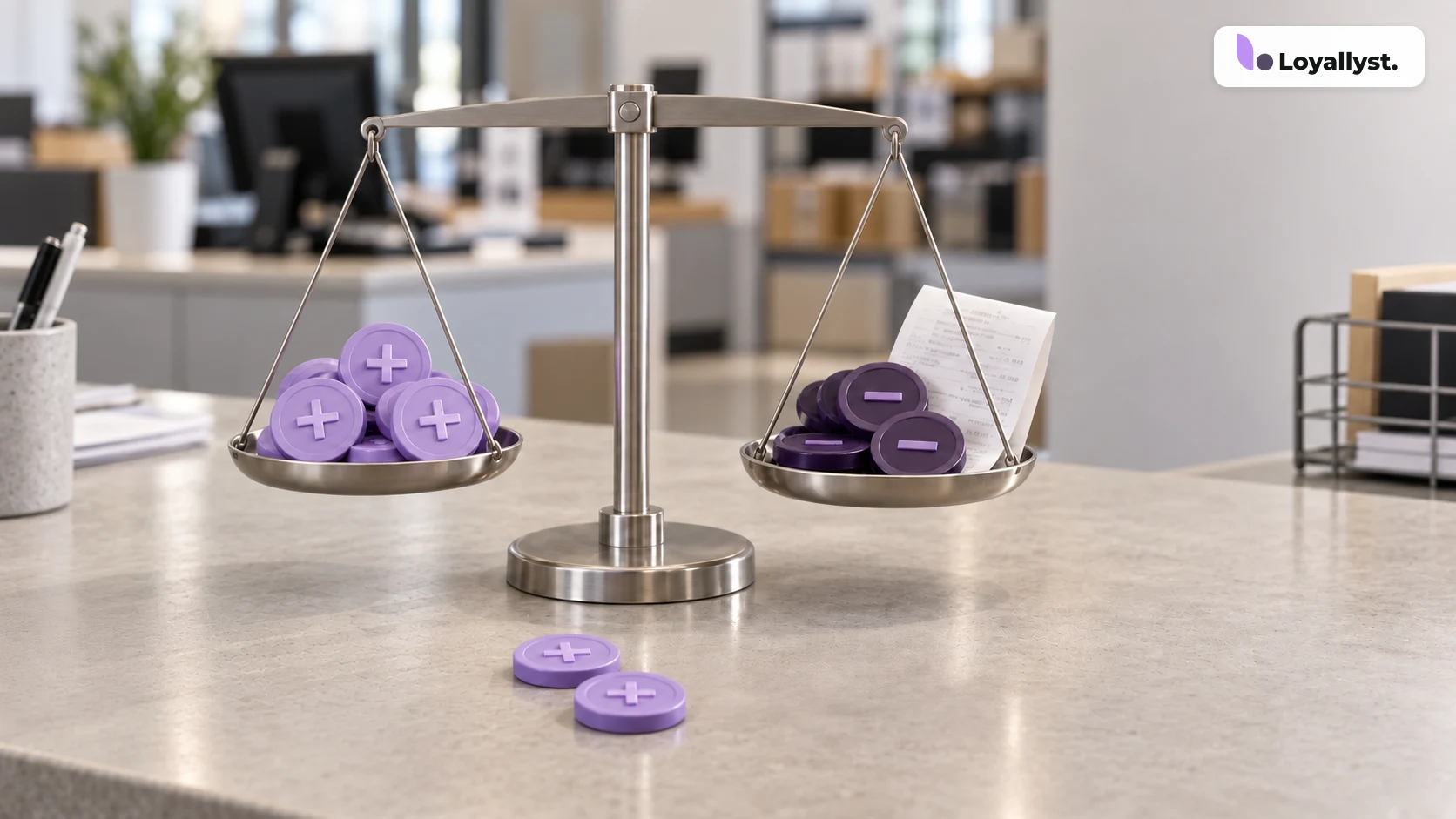
How Should You Award Bonus Points to Customers?
There is no single percentage that works for everyone. A coffee shop, a clothing store, and a jewelry boutique have different margins, average order values, and purchase frequencies. Therefore, it is better to choose the bonus-point earning rate based on the economics of the business rather than copying competitors. Here are the basic rules to consider.
1. Award Points for a Specific Action
The clearest option is to award points after a purchase. Customers immediately see the connection: they spend money and receive part of the value back for their next order. But points can also be awarded for other actions: registration, a second purchase, a birthday, a review, or referring a friend. The important thing is not to reward everything. If points are too easy to earn, they quickly lose their value.
2. Choose a Clear Conversion Rate
The bonus-point conversion rate should be understandable without half a page of explanation. For example:
1 point = $1 discount
or100 points = $1
Both options can work, but the first is usually easier to understand. The more complicated the conversion rate, the more questions customers will have at checkout.3. Calculate the Rate With Your Margin in Mind
Suppose a store awards 5% of the purchase amount. A customer spends $100 and receives 5 points at a conversion rate of 1 point = $1. This reward feels noticeable without being overly aggressive. If the margin is low, you can offer 2–3%. If it is higher, 5–7% may work. The percentage can also vary for individual categories.
 This is precisely why one rule should not apply to the entire product range. A high-margin product may support a larger reward, while promotional items may be better excluded from point accrual altogether.
4. Do Not Award Points on the Part of an Order Already Paid With Points
Otherwise, you create a double reward. For example, a customer places a $100 order and pays $30 with points. It is more logical to award new points only on the remaining $70. This preserves the program’s economic logic and prevents it from becoming an endless chain of discounts.
5. Add an Expiration Period
Points without an expiration date can remain in accounts for years. This gives customers no reason to return sooner. An expiration period, on the other hand, creates a natural incentive. For example, points may remain active for 90 days. A few weeks before they expire, the program sends a push notification: “You have 12 points left; they will expire on November 15.”
 It is important not to make the period too short. If someone buys from you once every few months, points valid for only 14 days will feel more like a formality.
Which Bonus-Point Redemption Rules Work Best?
Allowing customers to redeem points however they like is not always profitable either. That is why bonus-point redemption rules should be defined in advance and made equally clear to customers and employees.
1. Set a Maximum Share of the Payment
A common question is: what percentage can be paid with bonus points? There is no universal answer, but many companies limit redemption to part of the order, such as 20%, 30%, or 50%. Imagine an $80 receipt and a 30% limit. The maximum amount the customer can redeem is:
$80 × 30% = $24
The remaining $56 is paid in money. This gives the buyer a real benefit without forcing the business to give away the product almost for free.
2. Add a Minimum Order Amount
Sometimes point redemption should only be available once the order reaches a certain amount. For example, redemption may be available on purchases of $30 or more. This is especially useful when the business wants not only to provide a discount but also to encourage a larger order.
3. Exclude Certain Products
Bonus-point redemption restrictions may apply to promotional items, gift certificates, new products, or low-margin categories. However, the program should not become a long list of prohibitions. If there are too many exceptions, customers will quickly conclude that using their points is practically impossible. It is better to keep only two or three genuinely necessary restrictions.
4. Do Not Combine Every Discount at Once
If a customer can apply a promo code, promotional discount, personalized coupon, and points to the same order, the final discount may become too large. It is much safer to define a rule in advance. For example, points may not be combined with certain promotions or may only be redeemed after the main discount has been applied.
How Can You Tell Whether the Rules Are Configured Correctly?
Do not look only at the number of points awarded. It is more useful to check:
- how many customers redeem points at all;
- how many days after earning points they return;
- whether repeat-purchase frequency changes;
- whether average order value increases;
- how many points expire;
- whether the margin declines after the program launches.
Why Is It Easier to Manage Points Through a Loyalty Program?
Manual control of point accrual is possible while the number of customers is small. Later, exceptions, different percentages, expiration periods, tiers, and personalized promotions appear, and a simple spreadsheet quickly becomes insufficient.
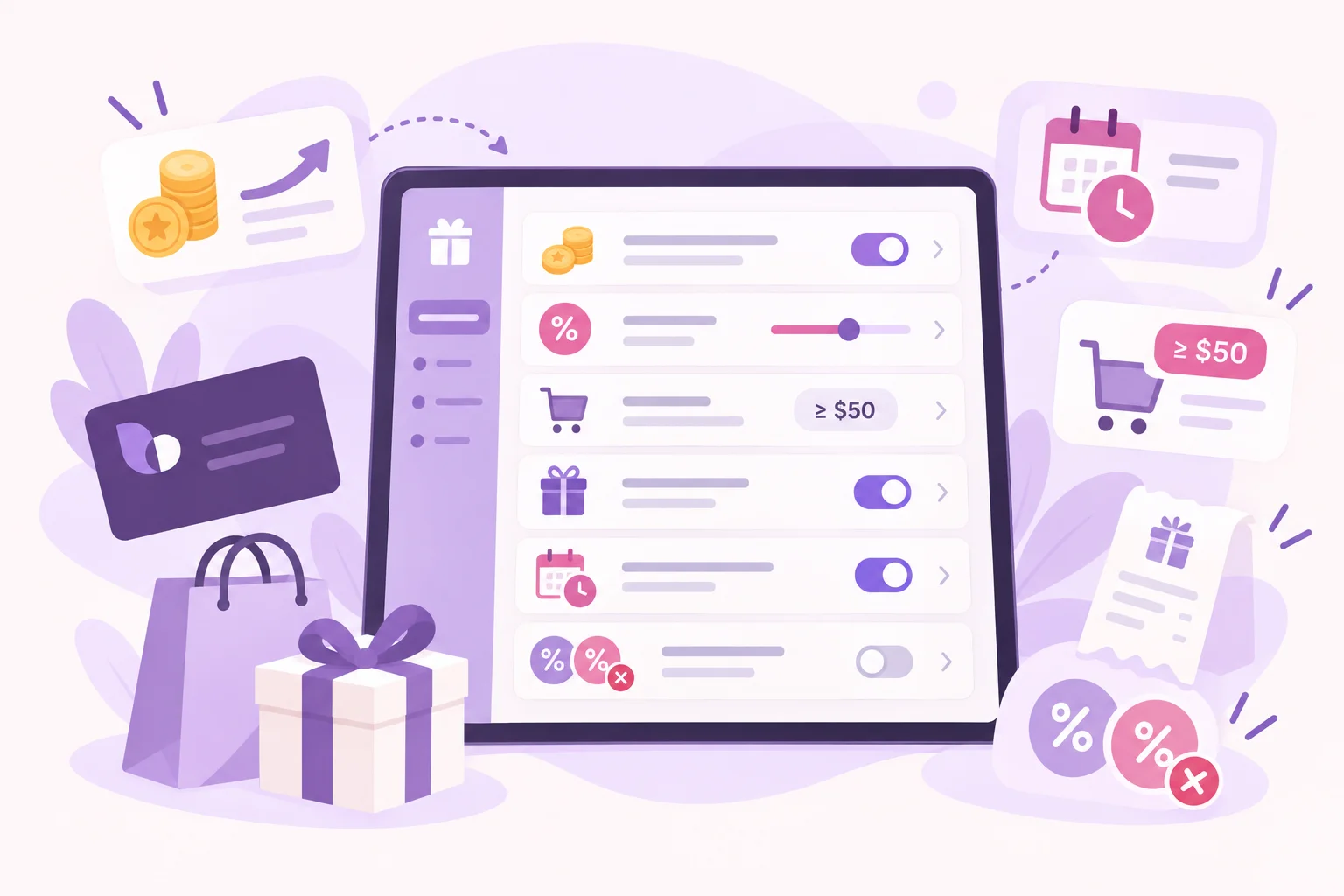
With Loyallyst, you can configure bonus-point earning rules, percentages, conversion rates, expiration periods, and redemption restrictions in one system. The customer’s balance updates automatically, and employees do not have to remember how many points can be awarded or redeemed each time. A good reward mechanic does not have to be the most generous. It has to be clear. Customers see the benefit and know how to use it. Meanwhile, the business preserves its margin and achieves the exact goal for which it introduced the program: more repeat purchases and greater value from regular customers.


Frequently asked questions
Award points for specific actions, use a clear conversion rate, and account for your margin. Avoid awarding new points on the part of an order already paid with points.
There is no universal rate. A low-margin business might start at 2–3%, while a higher-margin business could offer 5–7% and set separate terms for different categories.
Many companies limit redemption to part of the order, such as 20%, 30%, or 50%. The exact limit should reflect the business's margin.
Yes. An expiration date creates a natural reason to return. It should match the normal purchase frequency, and customers should be warned before points expire.
Track the share of customers who redeem points, time to repeat purchase, average order value, expired points, and the program's effect on margin.