Repeat Purchase Rate: How to Calculate the Share of Repeat Purchases
First sales are almost always exciting. The advertising worked, someone placed an order, and the payment came through. But then the more interesting question arises: will they return? This is where Repeat Purchase Rate becomes useful. This metric shows what share of customers made more than one purchase during a selected period. It makes it easy to spot a situation where there are many new buyers, but the regular audience is barely growing.

Why calculate the share of repeat purchases?
Imagine an online store where 1,000 people placed an order in one month. At first glance, this looks like a good result. But if 900 of them bought only once, the business will have to actively attract a new audience again every following month. Now consider another situation: 400 of the same 1,000 customers returned for a second or third order. That is a completely different customer base.
This is why the share of repeat purchases helps you understand not just sales volume, but the quality of customer relationships. The metric shows whether a business can turn a first order into another one. It is especially useful to monitor after launching:
- a rewards system;
- cashback;
- personalized offers;
- automated reminders;
- a new loyalty program.
If the repeat purchase ratio grows after these changes, the selected mechanics are genuinely influencing customer behavior.
How do you calculate Repeat Purchase Rate?
The formula is quite simple:
Repeat Purchase Rate = number of customers with two or more purchases / total number of customers × 100%
Suppose a store had 800 customers over three months. Of these, 240 people placed at least two orders. The calculation is:240 / 800 × 100% = 30%
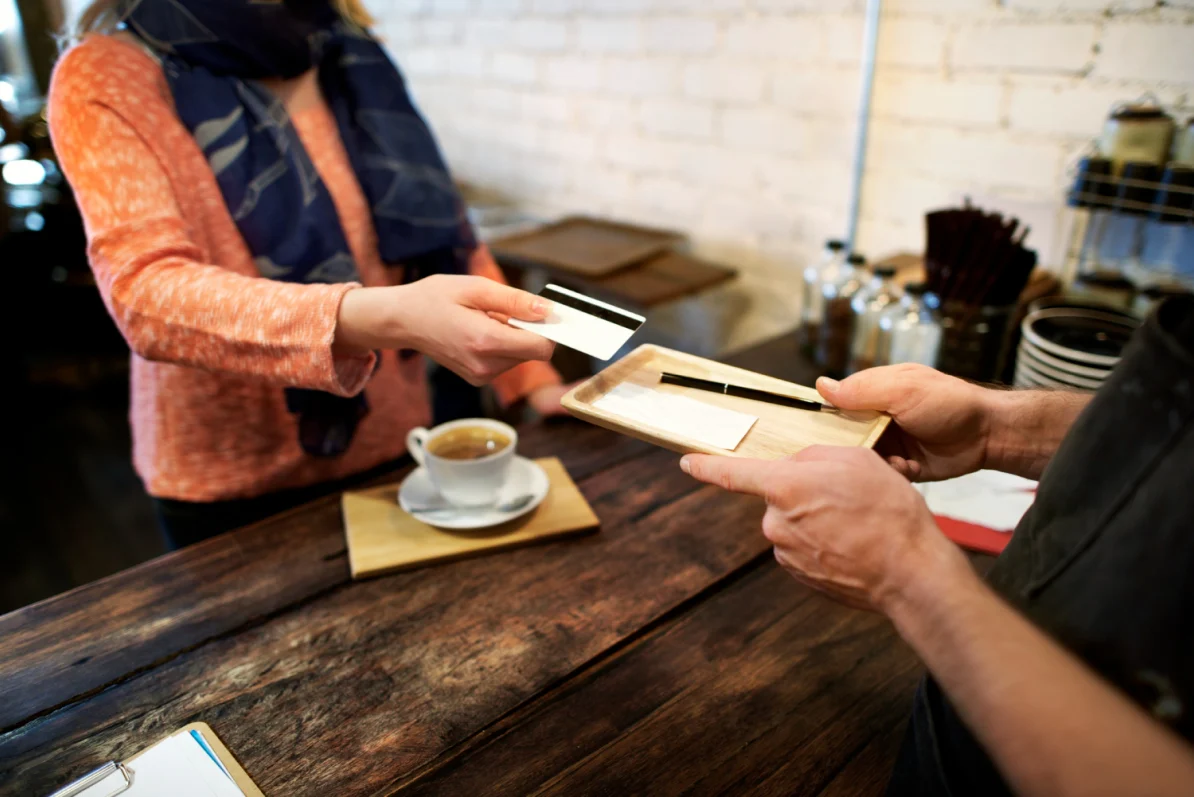
This means the repeat purchase percentage is 30%. There is one point that should be defined in advance: the calculation period. For a coffee shop, it makes sense to look at a month or a quarter because people may visit several times a week. For a furniture store, that period would be too short.
What does a high or low result show?
A figure of 25%, 40%, or 60% does not tell you by itself whether the result is good or bad. It is much more useful to look at the trend.
Suppose the repeat purchase rate used to remain around 28%, then rose to 37% several months after a loyalty program was launched. That is a change worth examining. If the figure falls instead, there may be many reasons: inconvenient service, an excessively long interval between purchases, a weak rewards mechanic, or simply no contact with the customer after the first order. At this point, a sales table alone is no longer enough. You need to see which customers stopped returning and what happened beforehand.
What does a loyalty program have to do with it?
For Repeat Purchase Rate, a loyalty program is particularly useful for two reasons.
First, the program connects purchases to a specific customer. Without it, a business may see the number of receipts but not understand who placed their first order and who has already placed their fifth.
Second, it becomes possible to influence the metric instead of simply observing it. For example, someone makes their first purchase and receives rewards for the next one. Two weeks later, the system sees that they have not returned yet and sends a short balance reminder.

How can you increase the share of repeat purchases?
It is better not to start with a large discount for the entire database. Several small changes are usually more effective.
Give customers a reason to return after their first order. This could be welcome rewards, cashback, or an additional reward for a second purchase.
Do not miss the right moment. If customers usually return after 30 days, a reminder four months later will change very little. A loyalty program can launch these workflows automatically.
Segment the audience. A new customer, a regular buyer, and someone who has not visited for six months are in different situations. Their offers should also be different.
Monitor rewards. If they are awarded frequently but hardly anyone redeems them, the conditions may be too complicated or the benefit may simply be difficult to notice.
Compare results before and after changes. If you launch additional cashback for a second purchase, check whether Repeat Purchase Rate increases. If it does not, do not keep raising the percentage indefinitely. Test another mechanic instead.
With Loyallyst, purchase history, rewards, and customer activity can be collected in one system. This simplifies the metric calculation and helps you quickly see who returned after their first order and who has started dropping out of their usual purchase cycle.
Ultimately, Repeat Purchase Rate is not just another percentage in a report. It answers a practical question: how many new customers did the business genuinely manage to turn into regulars? The more accurately you track this figure, the easier it is to understand which loyalty program mechanics genuinely work.
Frequently asked questions
Repeat Purchase Rate is the share of customers who made two or more purchases during a selected period. It shows how successfully a business turns new buyers into regular customers.
Divide the number of customers with two or more purchases by the total number of customers, then multiply by 100%. For example, 240 repeat buyers out of 800 customers produce a rate of 30%.
The period depends on the normal purchase cycle. A month or quarter may be appropriate for a coffee shop, while a furniture store needs a longer period.
The value should be assessed together with its trend. Growth after a new mechanic launches may show that it is effective, while a decline may point to inconvenient service, weak rewards, or lost contact after the first order.
A loyalty program connects purchases to specific customers and can automatically offer rewards for a second order, send timely reminders, segment the audience, and measure the result of each mechanic.