How Can You Increase Repeat Sales and Earn More Profit from Existing Customers?
Acquiring a new customer is expensive for a business. You need to launch advertising, bring someone to your website or store, and persuade them to place their first order. Then something strange happens: the purchase is complete, the money has been spent, but hardly anyone continues working with that customer.
A month later, they no longer remember the company's name. A little while after that, they order from a competitor.
That is why the question of how to increase repeat sales usually does not arise immediately. At first, businesses try to grow traffic, expand advertising campaigns, and attract even more new customers. Only later does it become clear that some revenue is literally slipping away: people buy once and disappear.
A repeat order works differently. The customer already knows the product, the service, and the terms. There is no need to convince them all over again that the company can be trusted. If the first experience was positive and the person has a reason to return, the next sale is much easier.
A loyalty program creates exactly that reason. Rewards, personalized offers, reminders, and a digital card all help keep a customer after their first purchase. At the same time, the business can see who returned, how many days it took, and what influenced the decision.
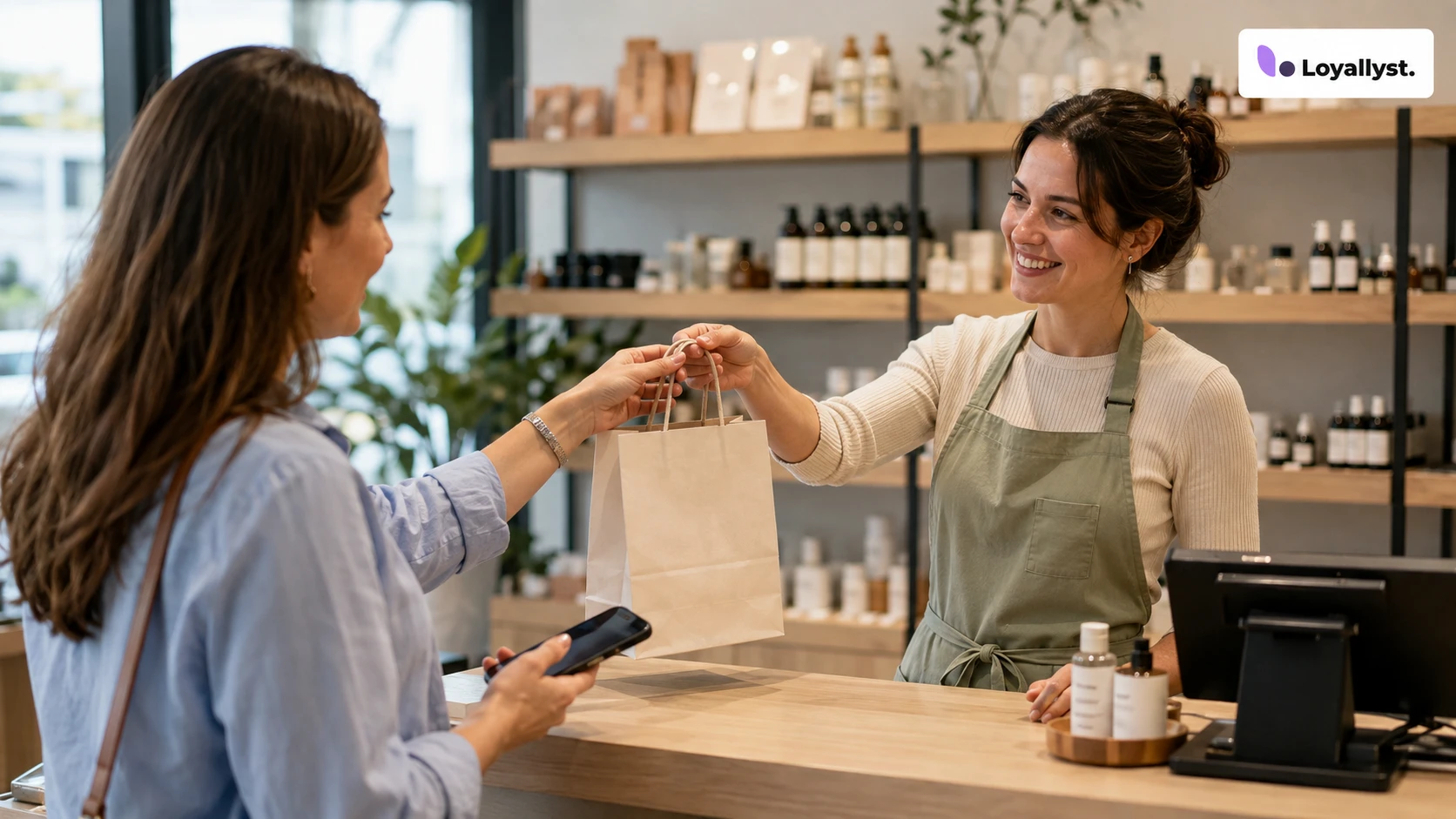
What Do Repeat Purchases Depend On?
A customer rarely returns simply because they once liked a logo or an advertisement. Usually, several factors work together.
First, the purchase experience itself. If the order took too long, an employee was inattentive, or the promotion's terms were unclear, no amount of cashback will save the situation.
Second, the benefit. It does not have to be large. Sometimes a few rewards on a card are enough to remind someone about the store at the right moment.
There is also convenience. It is easier for a customer to return somewhere their digital card is already saved, their balance is visible, and they do not have to figure out the rules again.
The following most often help increase repeat purchases:
- rewards or cashback after an order;
- personalized offers instead of identical mailings;
- reminders at the right moment;
- clear loyalty program terms;
- quality service before and after a purchase;
- a convenient digital card with an up-to-date balance.
On its own, each tool may have a small effect. Together, they work noticeably better.
How Can You Tell Whether Customers Are Returning?
The phrase “we have many regular customers” sounds encouraging, but it is not enough for analysis. You need numbers.
A loyalty program links purchases to individual customers and shows how their behavior changes. Without this, it is easy to confuse repeat sales with orders from different people.
| Metric | What It Helps You See |
|---|---|
| Repeat purchase rate | What share of customers returned after their first order |
| Purchase frequency | How many times one customer buys during a selected period |
| Average interval between orders | How many days it usually takes people to return |
| Repeat sales indicator | Whether the number of repeat orders is rising or falling |
| Repeat purchase metric by segment | Which customer groups return more often than others |
It is better to look at a combination of metrics rather than a single number. For example, the share of returning customers may increase while they order less frequently. Or the opposite: there may be few regular customers, but each visits several times a month.
These differences already suggest what should be changed in the loyalty program.

Four Ways to Increase Repeat Sales
1. Leave a Benefit for the Next Purchase
A one-time discount ends with the transaction. Rewards work a little differently: part of the benefit stays with the customer and waits for their next visit.
Suppose a car wash awards 7% in rewards after every visit. The customer sees them on their digital card and understands that the next service will cost less. Of course, they can choose another car wash. But they have not accumulated anything there.
The mechanism is simple, but the percentage should be calculated in advance. An award that is too small will go unnoticed, while one that is too large will start eating into the margin. Sometimes it is better to offer increased rewards after several visits rather than high cashback to everyone indiscriminately.
2. Send Reminders When a Purchase May Actually Be Needed
Most customers do not make a conscious decision to switch to a competitor. People simply forget.
Automated workflows help here. For example, a cosmetics store sees that a particular product is usually purchased once every six weeks. Around that time, the customer can receive a short message: there are rewards left on their card, and the relevant category is available again.
This feels less intrusive than constant mailings about everything at once. The message does not arrive at random — it is connected to a previous purchase and the customer's usual cycle.
It is better to keep a push notification short. No ten exclamation marks or loud “today only” claims. A rewards balance, a clear offer, and an expiry date are usually enough.
3. Do Not Offer Everyone the Same Thing
Two customers may have the same average order value but completely different interests.
One buys earrings, another chooses gifts before holidays, and a third has browsed rings several times without ordering anything. Sending them all one mailing about the entire new collection is the easiest approach, but far from the most precise.
A jewelry store can divide its database by order history. Show earring buyers new designs in that category. Remind those who usually choose gifts about an approaching holiday in advance. And offer inactive customers increased rewards for a limited time.
This way, repeat sales in marketing stop depending on mass promotions. Offers become more focused and reach their audience more accurately.
4. Track the Gaps Between Purchases as Well as the Purchases Themselves
Sometimes the most useful number is not the order amount, but the number of days since the last visit.
Suppose a regular customer usually bought once a month. Then 45 days pass, followed by 60. That is already a signal. Perhaps they have lost interest, found an alternative, or simply forgotten about the company.
A loyalty program lets you notice this pause before the customer leaves for good. A separate workflow can be set up for these customers: remind them about rewards, suggest a product from a familiar category, or send a personalized offer.
This is how the sales funnel and repeat sales start working together. The first purchase is no longer considered the final point. It is followed by the next visit, increased order frequency, a move to a new program tier, and the return of those who have become less active.

Small Mechanisms That Also Work
Not every improvement requires a major promotion. Sometimes a slight change to the rules is enough.
For example:
- award welcome rewards after registration;
- set an expiry date for points;
- increase cashback after the third or fifth purchase;
- add tiers for regular customers;
- allow rewards to pay for only part of an order;
- send different messages to active and inactive customers;
- award extra points for a review or referral.
It is better not to launch everything at once. Otherwise, it will be hard to understand which mechanism affected the result. It is easier to choose one, look at the repeat sales indicator, and then compare the figures before and after launch.
Why Is a Loyalty Program More Useful Than Constant Discounts?
A discount solves a problem here and now. It can encourage someone to buy, but it tells the business almost nothing about whether that customer will return later.
A loyalty program works differently. The work does not end after the order. The system keeps the customer's history, calculates visit frequency, shows accumulated rewards, and helps choose the moment for the next contact.
A discount can still be part of the program. It is simply offered to a specific group for a clear reason, rather than to everyone indiscriminately. For example, new customers, shoppers with a high average order value, or those who have not returned for a long time.
A repeat purchase in marketing is valuable for more than just the additional revenue. It shows that the first experience was good enough for the person to choose the company again. And as the number of these customers grows, the business becomes less dependent on continually increasing its advertising budget.
Sales become more stable. Not because advertising is no longer needed, but because every new customer has a chance to become a regular one.

Frequently asked questions
Give customers rewards for their next purchase, send timely reminders, personalize offers, and track gaps between orders. These tools work better alongside quality service and clear loyalty program terms.
Track the repeat purchase rate, order frequency, the average interval between orders, changes in the number of repeat sales, and metrics by segment. Combining metrics gives a more accurate picture than a single number.
A one-time discount applies to the current purchase. Rewards stay on the digital card and create a reason to return. Calculate the reward amount so that the benefit is noticeable to customers without eating into the business’s margin.
Use the customer’s order history and usual purchase cycle as a guide. A reminder is appropriate when a product may be needed again or the gap since the last visit has become longer than usual. Keep the message short and include a clear offer.
Segmenting the database by purchase history and activity lets you suggest products from familiar categories and set up separate rewards for inactive shoppers. This makes offers more relevant to each group’s interests and behavior.