Why a loyalty program matters: a simple explanation for businesses
At some point, almost every entrepreneur asks a simple question: why do you actually need a loyalty program, and does it really impact sales? At first, it all seems quite obvious: a customer makes a purchase, gets bonuses or a small discount for the next visit, which encourages them to come back. However, it’s not just about bonuses. A loyalty program gradually changes customer behavior. People start remembering the store where they already have accumulated bonuses. The next time they need a gift, something new, or just a regular purchase, they recall that exact place. Not always immediately. Sometimes it takes a month or two, but the habit still forms. That’s why the conversation about loyalty programs eventually comes up in almost every business where repeat purchases and returning customers matter.
What does a loyalty program actually do?
Simply put, a loyalty program helps a business stay connected with its customers. A customer makes a purchase — and receives a small reward. Cashback, points, a personalized offer. The exact format doesn’t matter. What matters is that they now have a reason to return. And this is where a simple psychological effect kicks in. If a person already has bonuses, it feels more natural to use them in the same place where they were earned.
You can read more in our article: “What is a loyalty program?”. A loyalty program helps solve several key tasks at once:
- increase the number of repeat purchases;
- boost the average order value;
- win back customers who stopped buying;
- collect valuable data on customer behavior.
Over time, these factors start to influence revenue more than individual marketing campaigns.
Why is customer retention more profitable than acquiring new ones?
In business, there’s a rule backed by dozens of studies. Acquiring a new customer is significantly more expensive than retaining an existing one.
According to Loyallyst, the difference can reach 5–7 times. A new customer:
- doesn’t know the brand
- has doubts
- compares prices
- may choose a competitor
A returning customer, on the other hand, has already gone through this stage. That’s why a loyalty program helps you work with customers who already trust your business.
Example: how a loyalty program helps increase average order value
A small chain of coffee shops implemented a simple mechanic. Each order returned 5% in bonuses to the customer’s card. After three months, the metrics changed:
| Metric | Before the program | After implementation |
|---|---|---|
| Average order value | $4.8 | $5.6 |
| Repeat visits | 24% | 38% |
| Purchase frequency | 1.2 times per month | 1.8 times |
Why did the average order value increase? Because people more often added a dessert or a second drink to their order to use their bonuses.
Scenario #1: declining sales midweek
One of the most common challenges for restaurants is low traffic on weekdays. For example, a bar in the city center noticed that from Tuesday to Thursday, customer traffic drops by almost 30%. The solution turned out to be simple.
In the loyalty program for a restaurant, a campaign was launched: double bonuses for orders on Tuesday and Wednesday After two months:
- customer traffic increased by 22%;
- the average order value grew by 12%.
In this case, the loyalty program helped solve a specific business problem — uneven demand during the week.
Scenario #2: promoting an unpopular dish
Another common question is how to promote items that don’t sell well. For example, a café added a new bowl to the menu priced at $9, but sales were below expectations.
Then, through the loyalty program for a café, a personalized offer was launched: +200 bonus points for ordering the new dish Result:
- sales of the dish increased by 40%;
- many customers added a drink or dessert.
After a few weeks, the item became one of the popular choices.
Scenario #3: how to win back customers who stopped buying
Almost every business has customers who stop coming back. For example, an online cosmetics store noticed that around 35% of customers don’t make a repeat purchase.
Through the loyalty program, they launched an automated offer: if a customer doesn’t buy for 60 days, they receive $5 in bonuses. After three months:
- 17% of customers returned;
- their average order value was 14% higher.

Why does a digital loyalty card work better?
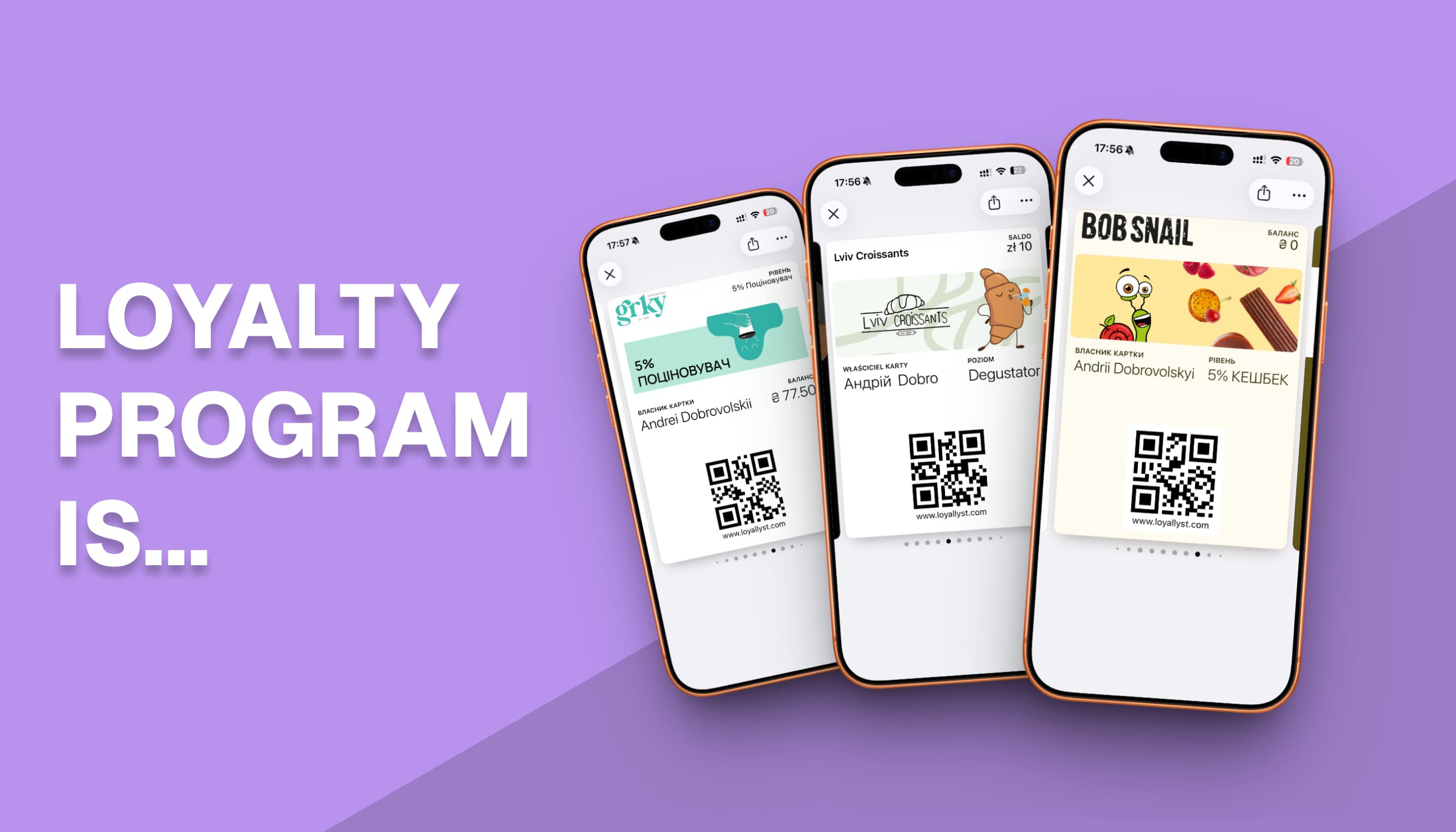
In the past, loyalty programs were often built around plastic cards. But this format has a drawback — cards are easily lost. Today, digital formats are used more and more often. And this raises another question: why do you need a loyalty card? The answer is quite simple. A digital card:
- is always in your smartphone
- updates bonuses automatically
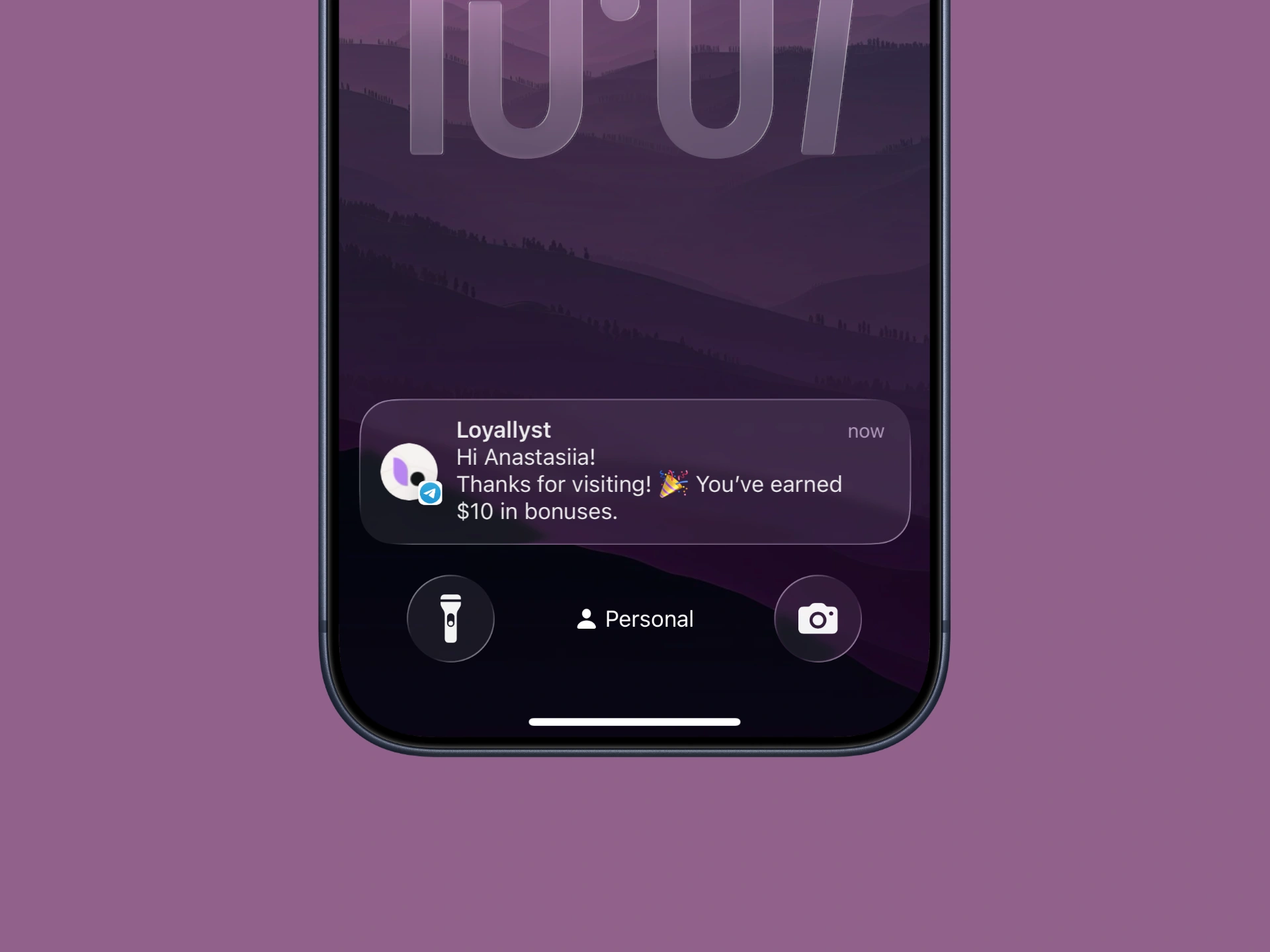
- can send push notifications
- doesn’t require installing an app
What mechanics do businesses use most often?
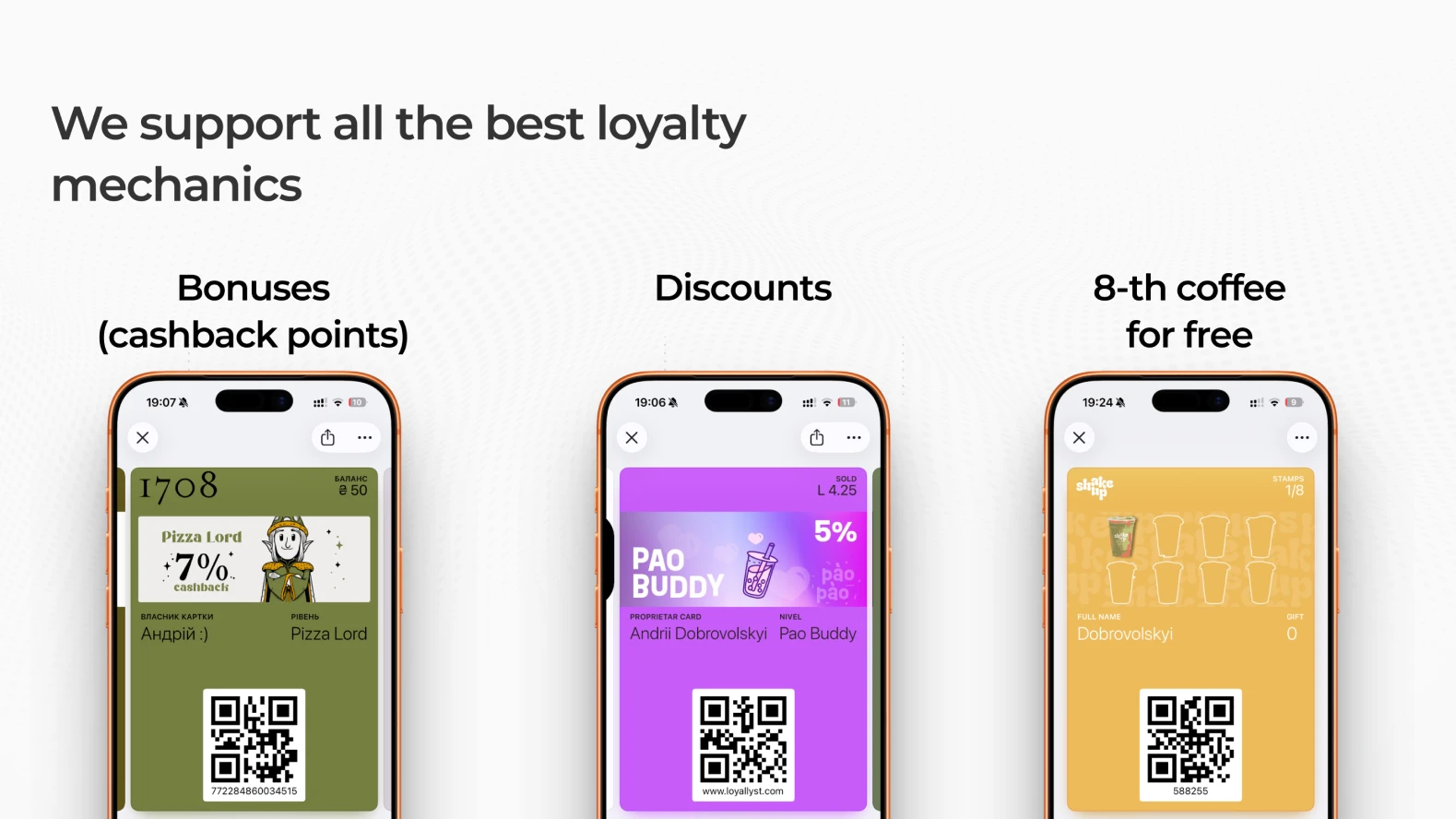
A loyalty program can work in different ways. The most common mechanics are:
1. Bonus system
The customer receives a percentage of the purchase. For example: a $80 purchase → $4 credited as bonuses
2. Cashback
Part of the amount is returned and can be used later.
3. Loyalty tiers
| Tier | Purchase amount | Bonus |
|---|---|---|
| Silver | up to $500 | 3% |
| Gold | up to $2000 | 5% |
| Platinum | from $2000 | 7% |
Such a system encourages customers to buy more often.
When does a business especially need a loyalty program?
There are several situations where the impact is particularly noticeable. A loyalty program helps if:
- repeat sales are declining
- you need to increase the average order value
- there are unpopular products or menu items
- it’s important to win back former customers
- the business wants to collect customer data
If you have already decided that your business needs such a system, you can read our article “How to launch a loyalty program?” or contact us and get a consultation.
Summary
A loyalty program rarely works as an instant growth tool. But over time, it begins to change customer behavior. People return more often, the average check increases, and the business understands its audience better. So, the answer to the question of why a loyalty program is needed is quite simple: it helps a business grow not just once, but systematically.



Frequently asked questions
A loyalty program helps businesses increase repeat purchases, raise the average order value, and retain customers. It creates motivation to return through bonuses, cashback, or personalized offers.
A loyalty program changes customer behavior: people return more often, spend more, and choose familiar brands. This gradually increases business revenue.
Acquiring a new customer is several times more expensive than retaining an existing one. Loyal customers already trust the brand and are more likely to make repeat purchases.
The most common types of loyalty programs include bonus systems, cashback, and tier-based programs. They encourage customers to return and buy more often.
A digital loyalty card is always on a smartphone, cannot be lost, automatically updates bonuses, and allows push notifications, making it more convenient than a plastic card.