Loyalty Programs in Times of Crisis: Why It’s Important to Invest Today
The past few months have become yet another challenge for Ukrainians: power outages, lack of heating, constant shelling. Businesses have not been spared either — many establishments were forced to close, while stores had to reduce sales volumes and product ranges. In such difficult conditions, it becomes especially clear how important a loyal customer base is, because in times of crisis it is loyal customers who determine how stable a company’s revenue will be. One of the most effective tools for maintaining these relationships is a loyalty program. Let’s talk about it today.

What Is a Loyalty Program?
A loyalty program is a marketing tool designed to encourage repeat purchases and deeper engagement with a brand. In other words, it motivates customers to buy more from a company. Most often, it offers rewards for loyalty in the form of discounts, bonuses, cashback, or other special benefits. However, if we look deeper, it is primarily about building a habit. A loyalty card, regardless of its format, “connects” the guest to the brand, reinforces certain associations, and shapes a recurring pattern of behavior.
What Is the Core Value of a Loyalty Program for a Business?
A loyalty program is no longer a competitive advantage on its own. In Ukraine, it is implemented across almost every industry — from restaurants and pharmacies to banks and currency exchange offices. This is because a well-designed loyalty program allows businesses to:
- increase revenue;
- raise the average order value;
- grow customer LTV;
- reduce dependence on constant new customer acquisition.

Why Do Customers Abandon Loyalty Programs?
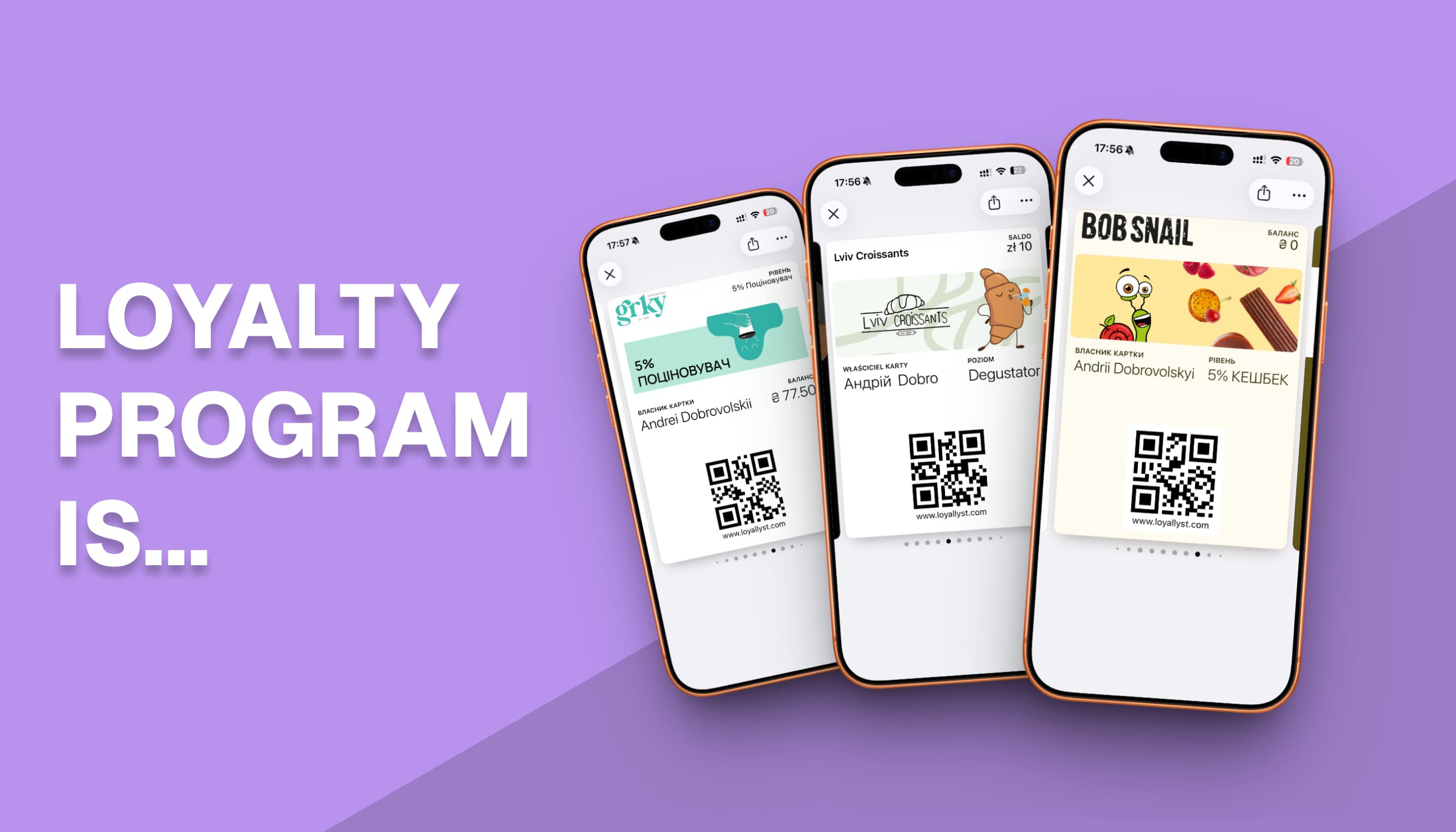
There are many successful examples of loyalty programs on the market — Silpo, WOG, GRKY — but there are even more systems that customers choose to abandon. The issue often lies not in the interaction format itself, but in the customer’s lack of understanding of the program’s value and the absence of clear communication about it. When a guest is asked to leave their phone number for registration without any explanation of the benefits, it naturally creates resistance. They simply do not understand what they will receive in return. Communication is the foundation of working with your customers. Instead of the usual “Shall we connect your card?”, you could say: “Do you have a loyalty card? We can activate it so that 10% of every order is returned to you as bonuses. You’ll be able to use them starting from your next purchase.” Other reasons why customers refuse to join a loyalty program include:
- Minimal benefits (for example, 0.5% in bonuses);
- Complicated or non-transparent bonus accrual logic;
- Restrictions on using bonuses (by time, purchase amount, or sales channel)
If a loyalty program only creates the illusion of value without delivering real benefits, it can also reduce trust in the brand.
What Kind of Loyalty Program Do Customers Expect Today?
Today, a loyalty program is part of the overall customer experience. It must be integrated into the service, communication, and strategy of the company. To function effectively, it should at least be:
- Personalized. Customers do not want to receive mass, irrelevant messages. While broad campaigns are still useful for certain announcements or reminders, it is far more effective to segment audiences based on interests and behavior. For example, a coffee shop can send different offers to customers who regularly order cappuccino and those who prefer tea. This significantly increases repeat purchase conversion.
- Convenient. Not every business needs a standalone app, and not every customer is willing to install one. For small establishments, this can become a barrier, as people may visit ten different coffee shops across various parts of the city. However, for chains with more than 10 locations, it can be a reasonable investment to maintain consistent contact with customers across multiple locations.
- Valuable. Customers want to feel care from the brand and see real value in the program. A symbolic 0.5% bonus will not create enough motivation to return to your store or venue. In contrast, a 10% bonus significantly strengthens the incentive to redeem accumulated rewards.

Which Communication Channels Work Best Today?
The best results come from a combined communication model. Its foundation can be a digital loyalty card in Apple Wallet or Google Wallet, complemented by other channels such as push notifications, messaging apps, and email. Over time, this approach forms a kind of contact ecosystem that helps identify which channel is most effective for each individual customer. It gives businesses the flexibility they need and the ability to communicate with customers in different formats, creating more touchpoints.
How Can a Brand Make the Right Decision About a Loyalty Program?
Before launching any loyalty program, I recommend that business owners and marketers put themselves in the customer’s shoes and answer a few key questions:
- Would I personally join this program?
- How easy and fast is it to sign up?
- What real value do I receive as a customer?
- Will this change how often I visit?

Frequently Asked Questions
Yes. During a crisis, a loyalty program becomes a strategic investment. It helps retain existing customers, стимулиates repeat purchases, and ensures more predictable revenue.
In times of crisis, loyal customers provide sales stability. A loyalty program increases visit frequency, average order value, and customer LTV, reducing dependence on constant new customer acquisition.
The main reasons include unclear benefits, complicated bonus logic, minimal rewards, or weak communication of the program’s value.
The most effective programs are personalized, simple, and valuable. They are seamlessly integrated into the customer journey, require no complex registration, and offer real benefits.
A combined model works best: a digital loyalty card in Apple Wallet or Google Wallet supported by push notifications, messengers, and email marketing.