How to Increase Brand Loyalty: What Actually Works in Business
Sometimes it feels like loyalty is something abstract. But if you look deeper, it becomes clear: customer loyalty to a brand is not a coincidence. It is the result of specific actions. And importantly, these actions can be managed. Let’s look at how this works in practice and what truly influences customer behavior.

What does brand loyalty actually mean?
In short, brand loyalty is a situation where a customer consciously chooses you, even when there are alternatives nearby. And not always because of price. Sometimes a person pays more but goes to a familiar place. Because:
- they have already had a good experience;
- they don’t want to take risks;
- there are bonuses or accumulated rewards;
- it’s simply habit.
What does loyalty look like in practice?
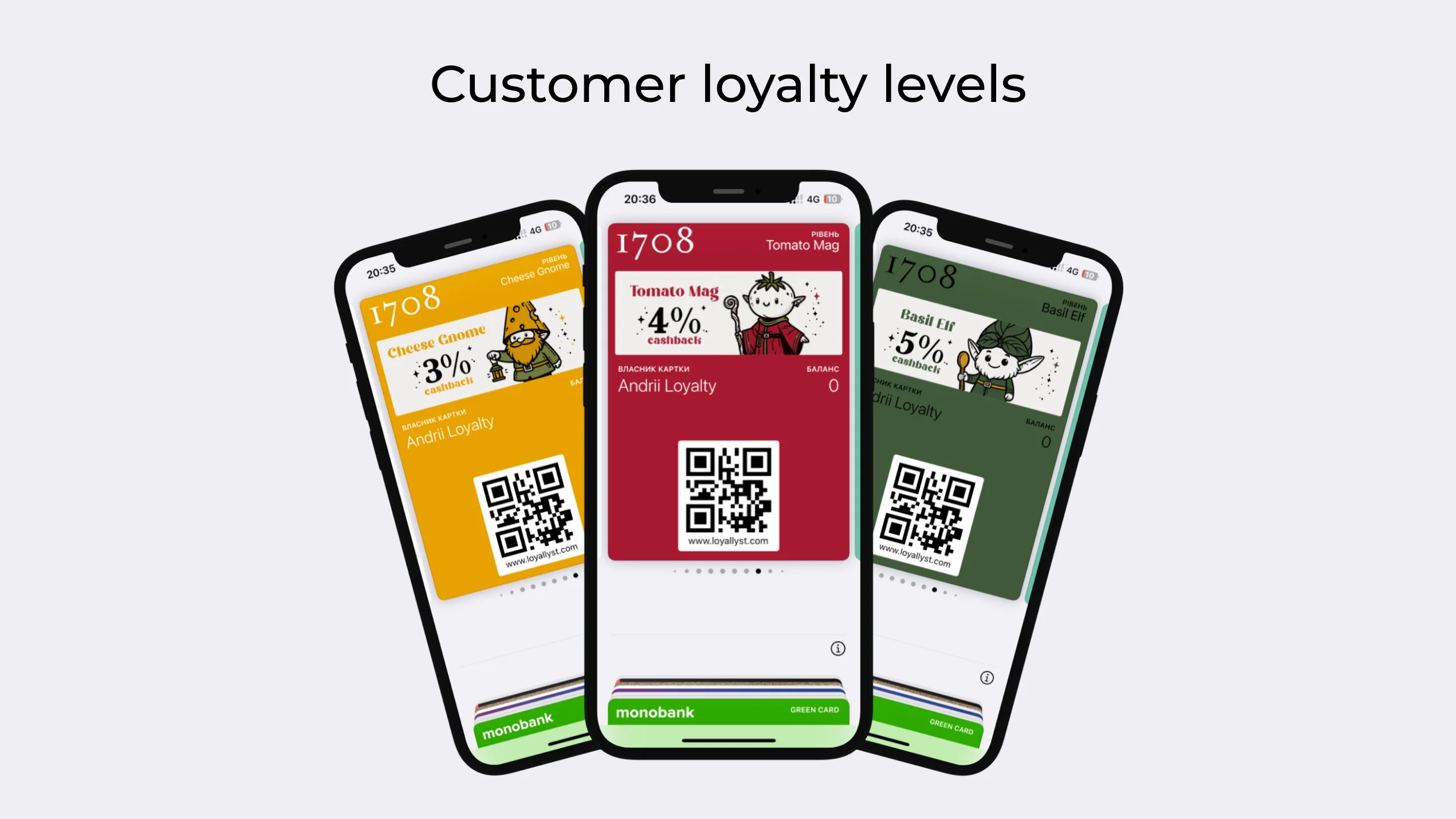
It’s convenient to look at this through levels of brand loyalty:
| Level | Customer behavior |
|---|---|
| 1. One-time | bought once and disappeared |
| 2. Returning | sometimes comes back |
| 3. Habit | chooses you more often |
| 4. Loyal | recommends to others |
Why don’t customers become loyal?
Often, everything breaks at one point. A person comes → makes a purchase → leaves → then silence. No reminders. No reasons to return. As a result, brand loyalty doesn’t grow — there is simply no continuation of interaction.
What actually influences loyalty?
Without unnecessary theory, there are several factors that almost always work:
- Predictability — the customer understands what to expect.
- Emotion — even a small one, but it stays in memory.
- Consistency — several visits in a row form a habit.
- A reason to return — and this is where the most important part begins.
Where does a loyalty program come in?
In practice, increasing brand loyalty without a system is almost impossible, because the customer needs a reason to come back. And this is exactly what a loyalty program creates:
- bonuses;
- accumulated rewards;
- personalized offers;
- reminders.
Business examples
Case 1. Vape shop and purchase frequency
A vape shop faced a problem: customers buy e-liquid and disappear for several weeks, sometimes forever.
They implemented a loyalty system for a vape shop:
- 5% bonuses;
- a message: “You have accumulated $4”;
- a reminder after 20 days.
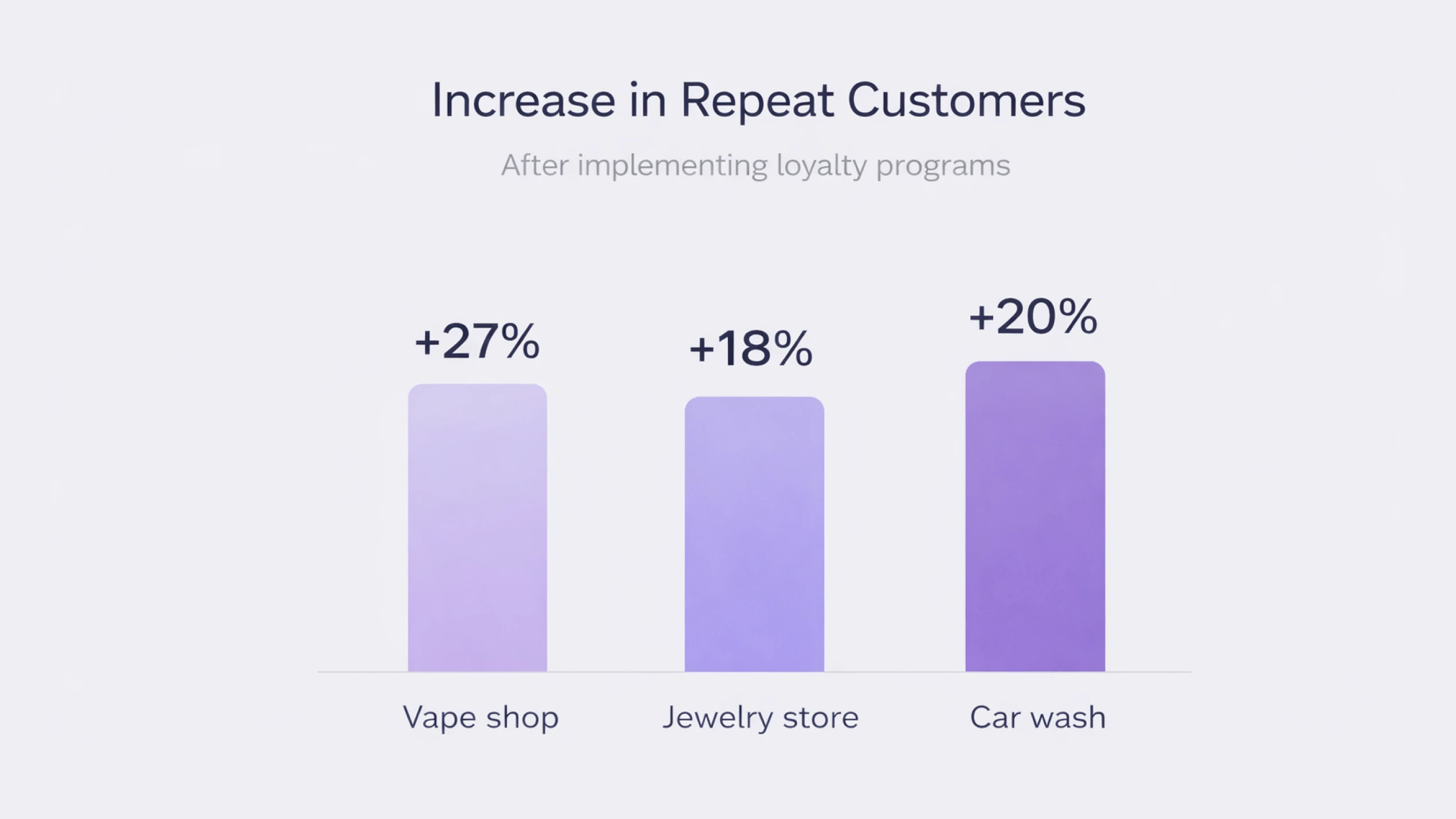
- customer return rate increased by about 27%;
- purchases started happening more frequently.
Case 2. Jewelry store and infrequent purchases
The challenge is obvious: jewelry is not bought often. The goal is not to lose the customer between purchases.
Solution: implementing a loyalty program for a jewelry store:
- bonuses after purchase;
- reminders before holidays;
- personalized offers.
- repeat purchases increased by 18%;
- some customers returned to the same consultants.
Case 3. Car wash and consistency
A car wash faced an unstable flow: many customers today, almost none tomorrow.
What they did using a loyalty program for a car wash:
- a bonus for each wash;
- reminders after 2–3 weeks;
- an offer of bundled services.
- the number of visits per customer increased;
- revenue grew by approximately 20%.
Why do loyalty cards amplify the effect?
A discount on its own is a one-time action. A card, however, is already a point of contact. A digital card allows you to:
- stay in the customer’s phone;
- remind about yourself;
- bring customers back through bonuses;
- segment offers.
Which mechanics work best?
If we put everything together:
- cumulative bonuses;
- loyalty tiers;
- personalized offers;
- reactivation of inactive customers;
- notifications.
Conclusion
To simplify: loyalty is not about a one-time promotion. It’s about repetition, connection, and habit. And if you want real growth in brand loyalty, it’s important not only to attract customers but also to bring them back. A loyalty program does this naturally, without pressure. And at some point, the customer stops choosing — they simply come back to you.


Frequently Asked Questions
Brand loyalty is when a customer consciously chooses you even when alternatives are available. It matters because loyal customers return more often, spend more, and recommend you to others.
Most often, there is no follow-up interaction after a purchase: no reminders, no reason to come back. The customer simply forgets about you and goes to a competitor.
A loyalty program creates a reason to return: bonuses, accumulation, personal offers, and reminders keep the customer engaged and gradually build the habit of choosing you.
Cumulative bonuses, loyalty tiers, personalized offers, notifications, and win-back mechanics for inactive customers work best.
Yes. A digital loyalty card lets you stay on the customer's phone, send push notifications, and deliver personal offers — without constant discounts on your entire range.