Customer churn in business: why people stop coming back
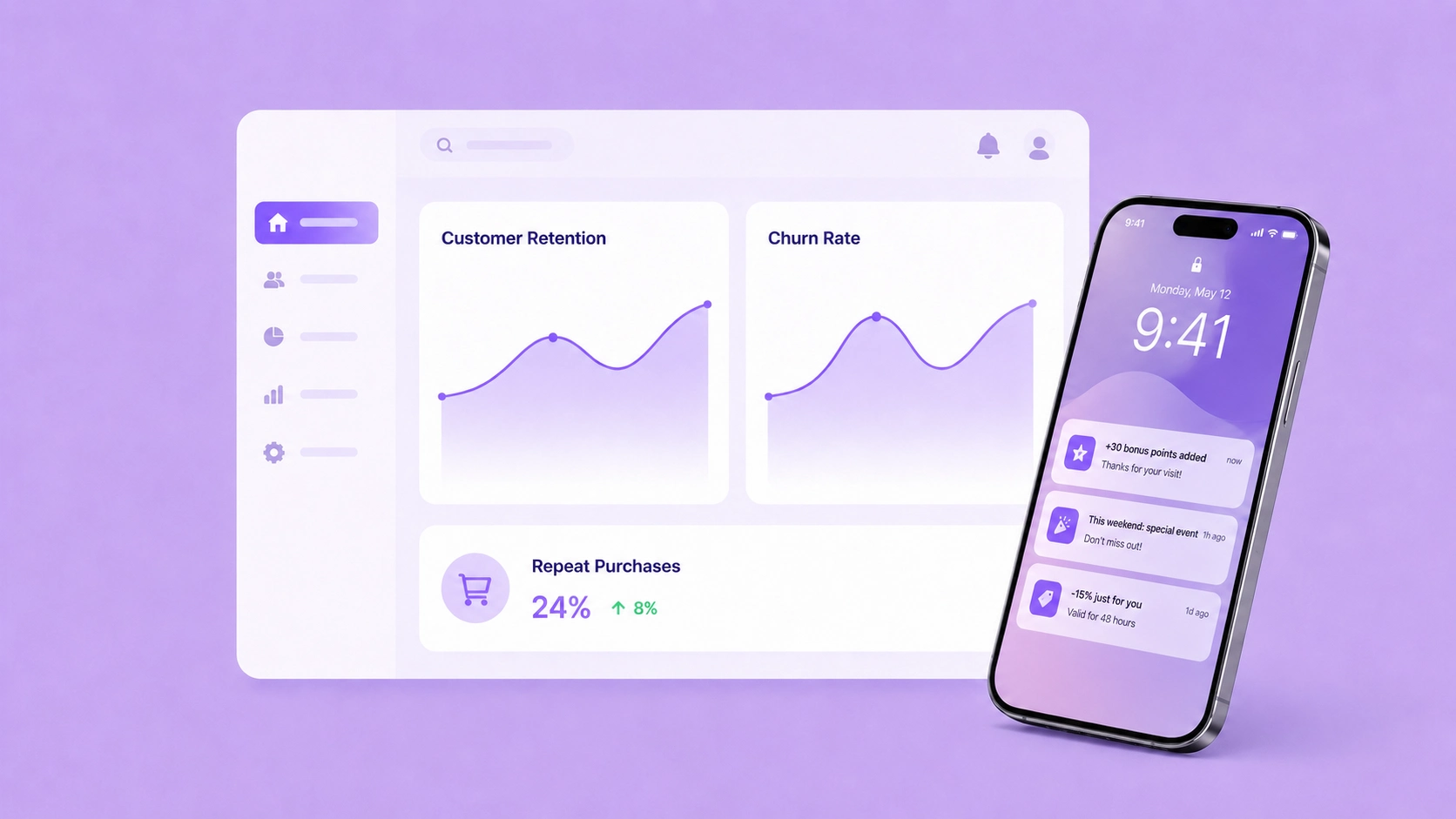
Sometimes a business feels like everything is working fine. Ads are running, new customers are coming in, and there seem to be sales. But after a few months, a strange feeling appears: there are fewer people, regular customers disappear somewhere, and revenue starts to “drop”. Most often, the problem is churn. And customer churn rarely happens suddenly. Usually, people leave quietly. They simply stop visiting, opening push notifications, or placing orders. And if you don’t notice this in time, the business starts constantly spending money only on attracting new customers.
What is customer churn?
In short, it is the number of customers who stopped using your business over a certain period. For example:
- a person used to buy coffee every week;
- now they haven’t come in for two months.
How to calculate the customer churn rate?
There is a basic formula.
Customer churn formula
Customer churn = (Number of customers who left / Total number of active customers) × 100%
Example
A car wash had 1000 active customers. Over one month, 180 people stopped coming. We get:
180 / 1000 × 100% = 18%
So the customer churn rate is 18%.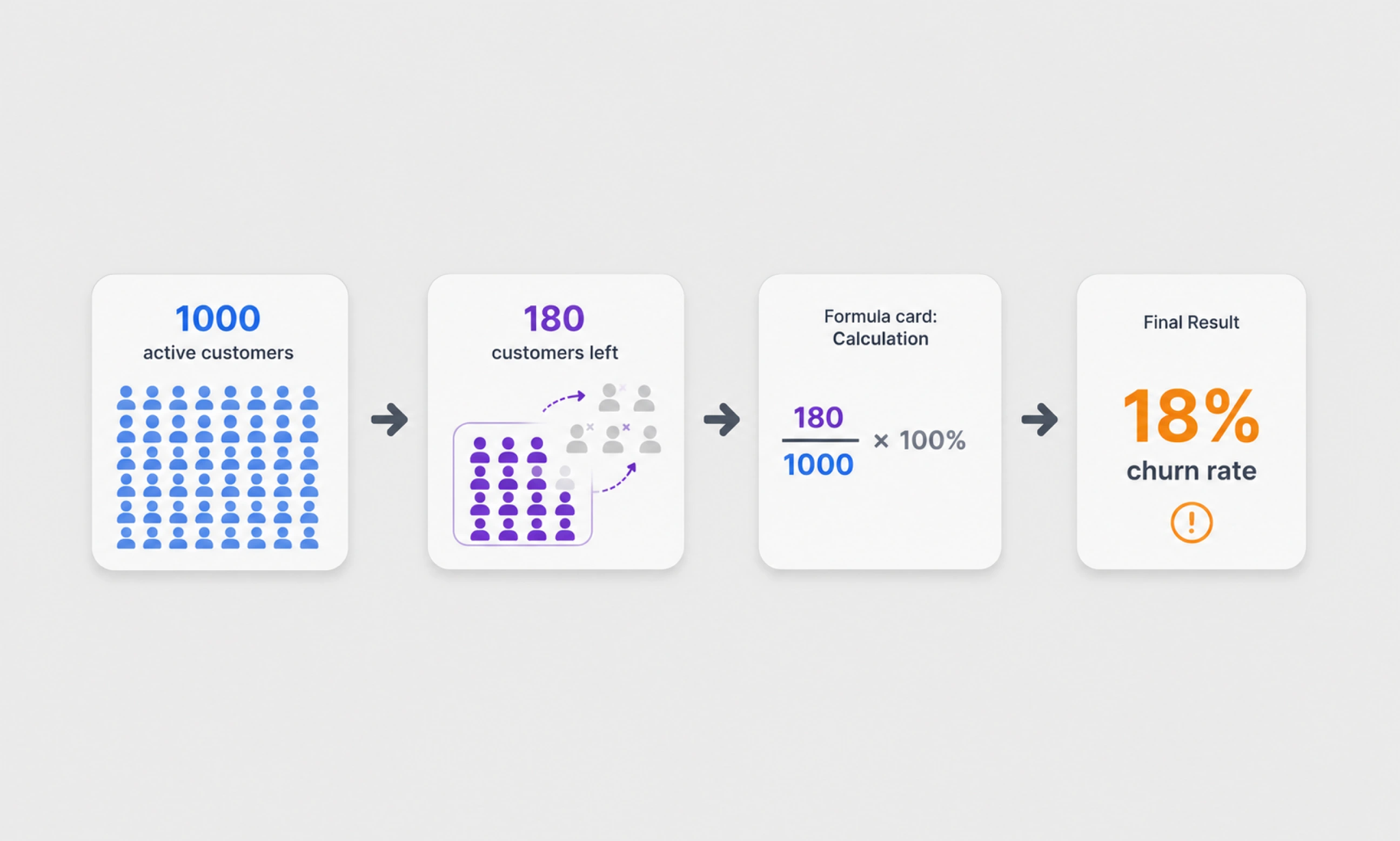
What churn rate is considered normal?
It depends on the business.
| Niche | Normal churn rate |
|---|---|
| Coffee shop | 10–20% |
| Beauty salon | 5–15% |
| Vape shop | 15–25% |
| Food delivery | 20–35% |
Main reasons for customer churn
Businesses often think that people leave only because of price. But in practice, there are many more reasons.
1. The customer is simply forgotten
This is one of the most common situations. A person buys a product once — and then there is no further communication. There are no:
- bonuses;
- reminders;
- personal offers.
2. There is no reason to come back
If a business does nothing to retain the customer, the person makes the decision about the next purchase “from scratch” every time. And this is where a loyalty program becomes especially important.
3. The customer experience has become worse
For example:
- long waiting times;
- poor service;
- inconvenient booking;
- problems with an order.
How to analyze customer churn
Without analysis, it is difficult to notice the problem in time. Usually, a business looks at:
| Metric | What it shows |
|---|---|
| Purchase frequency | how often customers return |
| Average order value | whether activity is declining |
| Period without a visit | risk of losing the customer |
| Repeat purchases | retention level |
Customer churn prediction
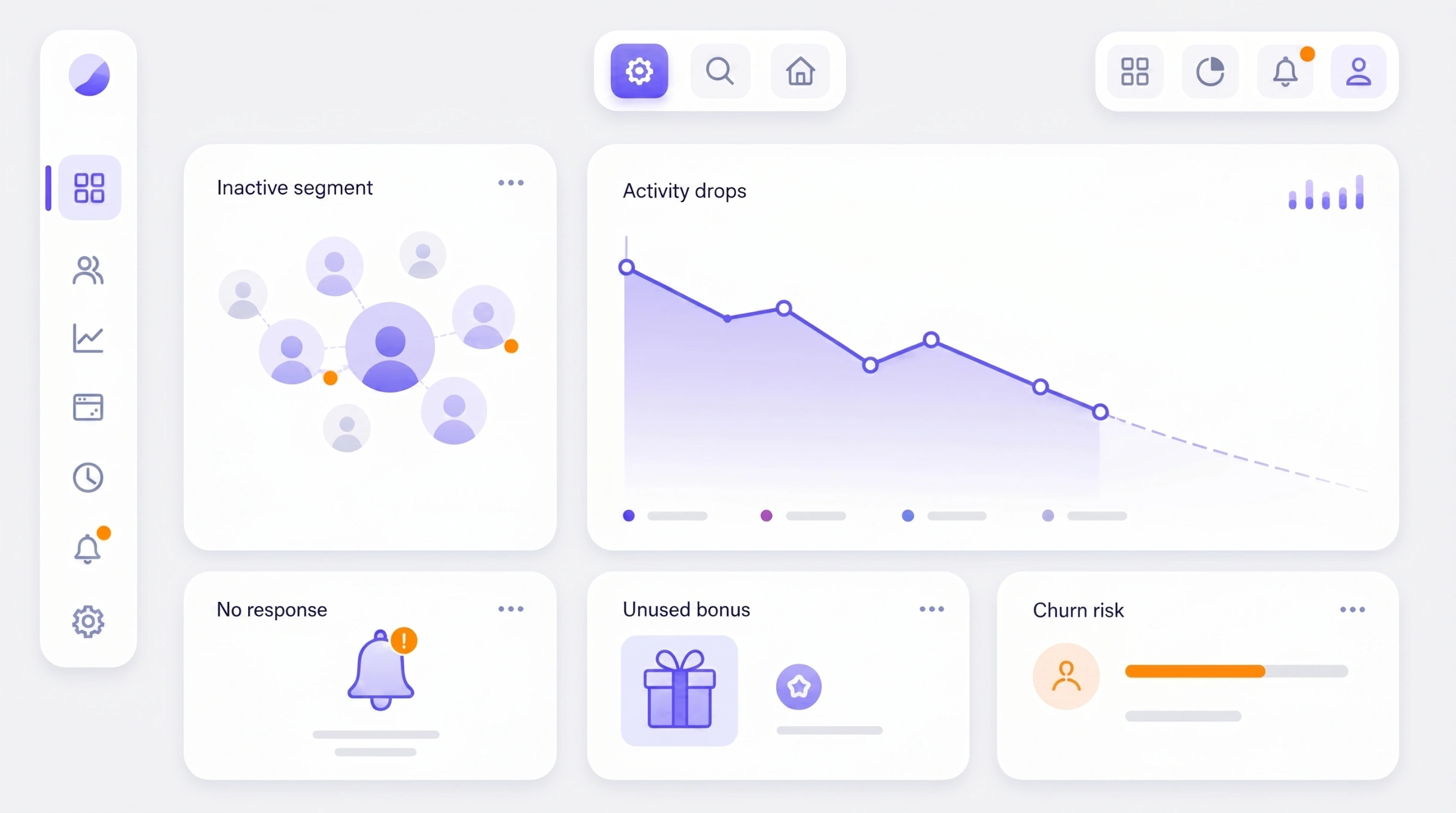
The most interesting part is that churn can be noticed in advance. For example:
- a customer used to buy every 10 days;
- 25 days have already passed;
- they don’t open push notifications;
- they don’t use bonuses.
How does a customer churn model work?
Essentially, it is a set of indicators that the system uses to assess the likelihood that a customer will leave. Most often, it takes into account:
- purchase frequency;
- activity in the loyalty program;
- use of bonuses;
- reaction to notifications;
- average order value.
How does a loyalty program help reduce churn?
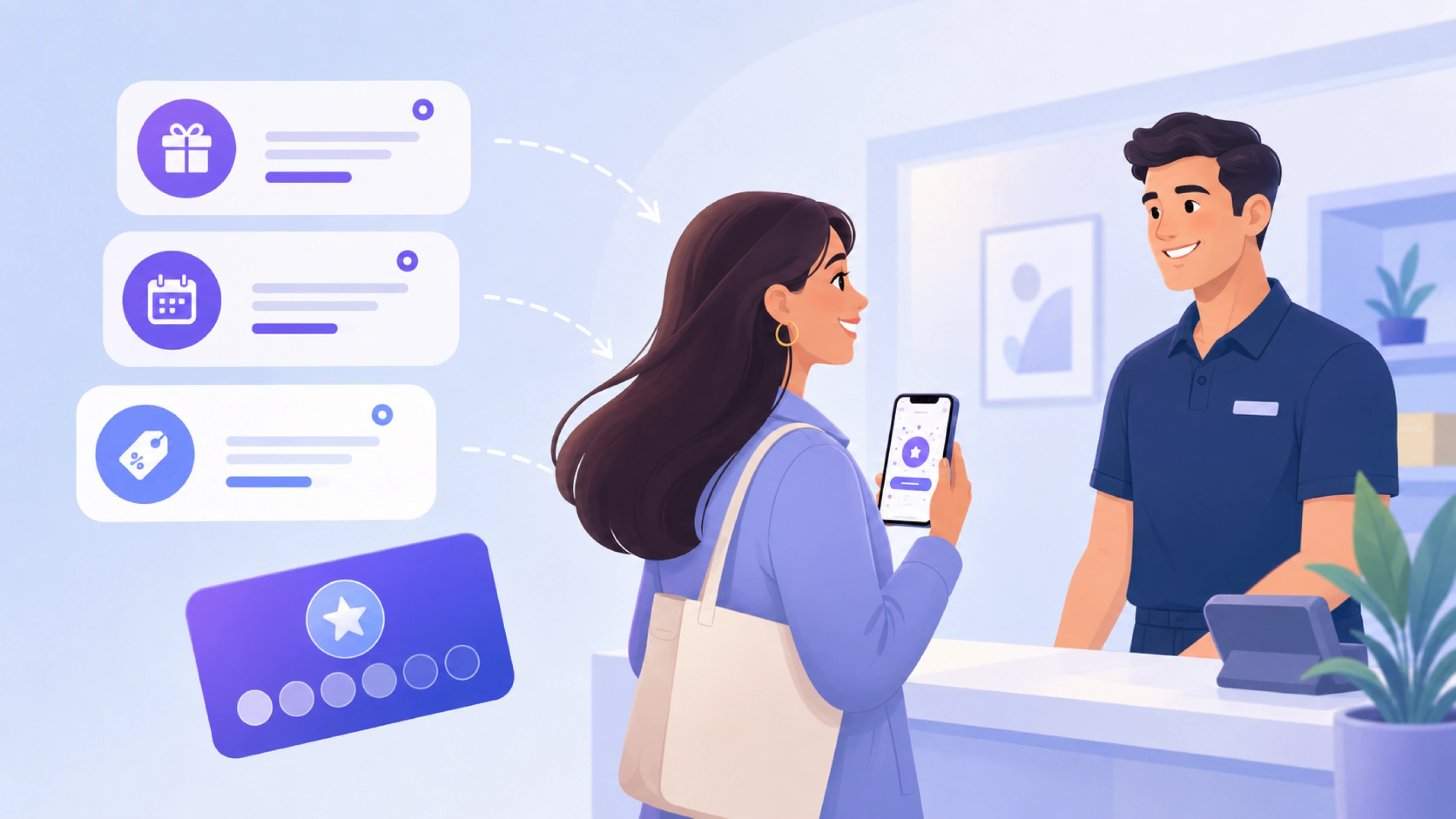
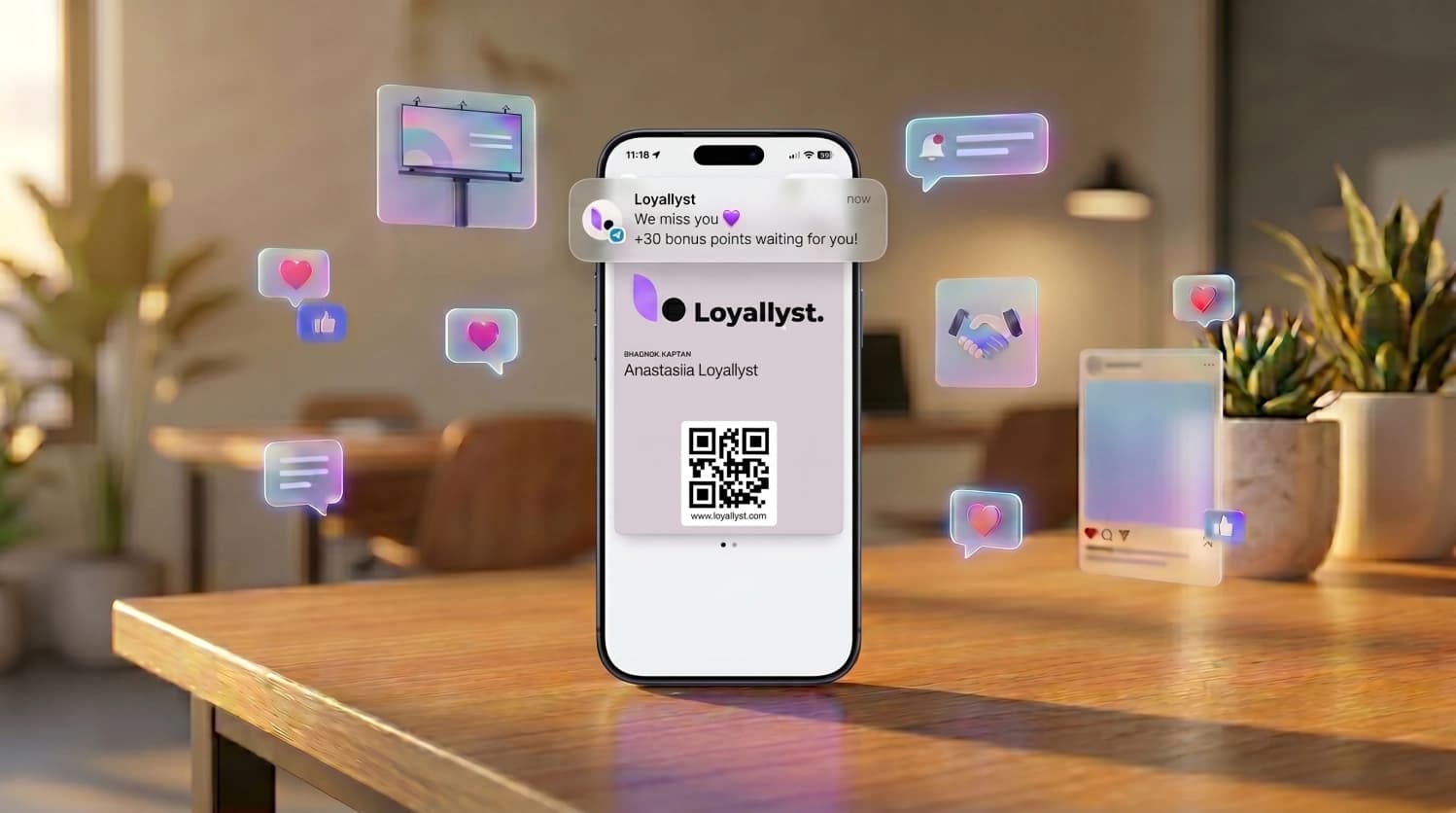
In practice, it is one of the most effective retention tools. Why? Because the program creates constant contact with the customer. It helps to:
- remind customers about the brand;
- bring them back with bonuses;
- make personal offers;
- track customer activity;
- notice a decrease in interest in advance.
Example: beauty salon
They connected a loyalty system for a beauty salon with automatic reminders. If a customer had not booked an appointment for more than 45 days, they were sent a personal offer. After 3 months:
| Metric | Before | After |
|---|---|---|
| Repeat bookings | 41% | 58% |
| Customer churn | 27% | 16% |
What methods help reduce churn?
Here is what usually works best:
- bonus programs;
- push notifications;
- personal offers;
- loyalty tiers;
- automatic win-back scenarios.
Conclusion
To be honest, the problem of customer churn cannot be solved with advertising alone. You can constantly attract new people, but if existing customers leave too quickly, the business starts to stall.
That is why companies are increasingly investing not only in acquisition, but also in retention. And a loyalty program becomes one of the key tools here. Because it helps not just to sell, but to build a habit of coming back again.


Frequently asked questions
Customer churn is the number of customers who stopped using your business over a certain period. For example, if a person used to buy a product regularly but has not returned for two months, this is already a churn signal.
Churn formula: (Number of customers who left / Total number of active customers) × 100%. For example, if 180 out of 1000 customers left, the churn rate is 18%.
The main reasons are: the customer is forgotten after purchase, there is no loyalty program or reason to come back, and the customer experience has worsened — long waiting times, poor service, or problems with an order.
It depends on the niche: for a coffee shop, the norm is 10–20%; for a beauty salon — 5–15%; for food delivery — 20–35%. What matters is not only the number, but also the trend: if churn grows for several months in a row, it is already a problem.
A loyalty program creates constant contact with the customer: it reminds them about the brand, brings them back with bonuses, sends personal offers, and tracks activity. For example, after implementing a loyalty system, a beauty salon reduced churn from 27% to 16%.